Looking ahead to 2026, the lighting market’s gonna favor suppliers who see small components—like springs—as more than just afterthoughts. Take Lighting Fixture Spring products, for example. These tiny parts are crucial—they hold sockets in place, help shade stay where it should, ensure grounding, dampen vibrations, and allow for repeated adjustments. But if that spring is weak or subpar? You might end up with annoying noises, misaligned fixtures, or even early failure. Nobody wants that, right?
According to the International Energy Agency, lighting accounts for about 15% of global electricity use. Since efficiency standards keep getting stricter, manufacturers are under pressure to get every part of their fixtures just right. Companies like Grand View Research point to LED adoption, smart controls, and energy savings as the big trends shaping the market. All of these mean sourcing the right springs can’t be an afterthought—they need to deliver consistent force, resist corrosion, fit perfectly, and withstand countless cycles without fail.
James R. Benya, a well-known lighting engineer and teacher, often says that "light is the most important element in architecture." But here’s the catch—good lighting also depends on reliable hardware hidden behind the scenes. No matter how great the illumination looks, if those mechanical details aren’t solid, the whole thing can fall apart. So, by 2026, top spring suppliers shouldn’t be just showing off pretty catalogs; they need to provide bona fide proof—material certifications, load and deflection data, cycle test results, RoHS and REACH compliance, and clear records of lot traceability. It’s all about trust.
Testing really matters, folks. A stainless steel spring should keep its tension through humidity, heat, and endless movements without slipping up. Yes, carbon steel might be cheaper, but you’ve gotta look closely at how it’s protected from corrosion and wear. Some suppliers show off impressive samples but struggle to keep consistent quality in production—that’s a red flag.
This guide walks you through how to evaluate suppliers in 2026, looking at their engineering skills, tooling experience, quality systems, ability to customize, lead times, and communication—because these really make a difference. And yes, there’s that tough question: can they keep spring performance steady after thousands of cycles? The answer should be backed by real data, not just promises.
Bottom line: choosing the right spring supplier isn’t just about price or pretty catalogs. It’s about confidence in their materials, testing, and ongoing performance. That’s what really counts when it comes to reliable lighting fixtures.
In 2026, a reliable lighting fixture spring supplier must offer more than competitive pricing. Spring performance affects fixture alignment, vibration resistance, and installation safety. Engineers should review wire grade, coil diameter, free length, and working load data. These details reveal manufacturing discipline.
A dependable supplier provides material certificates and batch-level traceability. Each shipment should connect to inspection records, production dates, and measured dimensions. Useful quality checks include load testing, fatigue testing, surface inspection, and corrosion evaluation. Samples should match mass production parts, not specially prepared prototypes. That distinction matters.
Communication also shows reliability. A capable supplier answers technical questions clearly and reports production changes before delivery. They should explain tolerance limits instead of promising perfect consistency. No supplier is flawless. The real test is how quickly they identify and correct a deviation.
During supplier audits, inspect coiling equipment, calibration labels, storage conditions, and packaging methods. Springs stored loosely can lose shape or collect surface damage. Small details become expensive failures.
A strong supplier also supports design review. They may suggest a safer spring rate, improved end shape, or better installation method. However, recommendations should include test evidence, not vague confidence. Lead time deserves equal attention. A supplier that meets one urgent order but misses regular schedules creates hidden costs. Reliable performance comes from repeatable processes, honest records, and practical technical support.
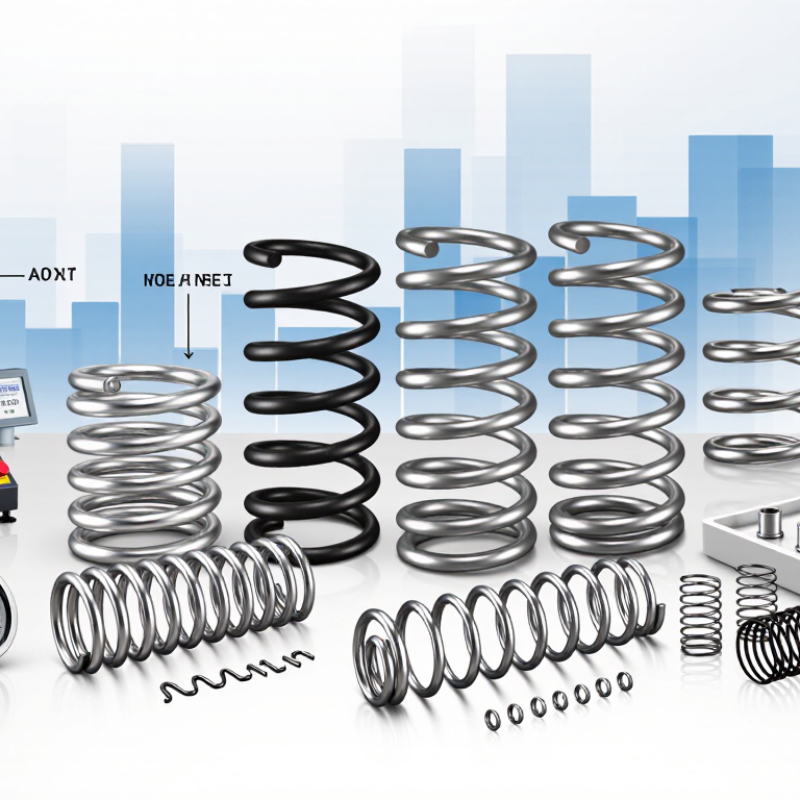
Modern lighting fixtures rely on springs for movement, retention, and controlled pressure. Compression springs often sit behind trim rings, lens holders, and adjustable spotlight joints. They provide steady force without taking much space. Compression springs are common. Torsion springs support hinged covers and rotating reflector parts. Their legs must align carefully, or the fixture may feel stiff and uneven. Extension springs appear in suspended mechanisms and adjustable arms, where controlled pulling force is needed.
Recessed downlights frequently use leaf springs to grip ceiling openings. These springs need enough flexibility for installation but strong recovery after repeated servicing. Wave springs offer axial pressure in shallow housings, making them useful when conventional coils are too tall. A Spring Door Spring can also secure access panels in certain architectural fixtures, especially where a compact closing force is required. Material selection matters. Stainless steel resists moisture, while high-carbon steel can provide strong fatigue performance with suitable surface protection.
In supplier evaluations, I check spring rate, working length, wire diameter, and cycle-test records. I also request samples assembled inside the actual fixture. Bench measurements can mislead. Heat from LED modules may reduce force over time, especially in poorly ventilated housings. One common mistake is choosing the strongest spring available. Excessive force can crack a diffuser or deform a thin mounting bracket. Tolerance control is equally important, because a small dimensional error may create rattling noise. I have seen promising prototypes fail after repeated adjustments, so real-cycle testing deserves more attention than appearance alone.
Lighting fixture springs must hold shape under heat, vibration, and repeated adjustment. Material selection therefore deserves more attention than appearance. Stainless steel suits humid areas because it resists corrosion. Carbon steel provides strong elastic recovery when properly treated. Phosphor bronze can help where electrical contact or stable conductivity matters. A Toy Spring may look similar, but lighting components require tighter load control and longer fatigue performance.
Manufacturers should verify wire diameter, coil pitch, free length, and working load during production. CNC coiling improves repeatability, while stress relief reduces early deformation. Heat treatment must match the selected alloy and spring geometry. Practical inspection includes dimensional checks, load testing, cycle testing, and surface examination. Salt-spray testing may support projects exposed to moisture, but it cannot represent every installation environment. Quality systems aligned with recognized standards, such as ISO 9001, can improve traceability without replacing engineering judgment.
Small defects matter. A sharp coating edge may become a crack after thousands of cycles. In my experience, samples often pass static tests yet fail after repeated movement. That gap deserves honest review. Suppliers should record batch data, test conditions, and rejected parts clearly. Engineers should also question whether the spring is overloaded during assembly. A reliable fixture spring is not simply strong; it is predictable, serviceable, and suitable for its actual environment.
For 2026 spring lighting-fixture sourcing, supplier quality should begin with measurable evidence, not polished samples. The International Energy Agency reports that lighting uses about 15% of global electricity. That makes optical efficiency, thermal control, and driver reliability commercial priorities. Ask for LM-80 data, TM-21 projections, photometric files, and test records from accredited laboratories. Check whether production samples match the approved golden sample. Small differences in diffuser thickness can change glare, color consistency, and perceived value.
Capacity requires a factory-level review. Request monthly output, equipment lists, workforce shifts, and current utilization rates. The U.S. Department of Energy’s Solid-State Lighting R&D Opportunities report tracks continuing progress in LED efficacy and reliability. A capable supplier should explain how those improvements enter production, rather than repeat technical slogans. Audit incoming inspection, aging tests, electrical safety checks, and final sampling. Review at least six months of defect and return data. Numbers can still be incomplete.
Customization needs equal discipline. Confirm minimum order quantities, tooling ownership, prototype fees, finish tolerances, packaging tests, and engineering-change procedures. For a spring launch, require a dated pilot schedule with buffer time for mold corrections. Ask for a physical sample under warm and cool lighting. Color often looks different in a showroom. I have seen attractive prototypes fail during heat testing. Supplier evaluation is never perfectly clean; capacity claims deserve independent verification, especially when one production line serves several projects.
| Evaluation Dimension | Practical Benchmark for Lighting Fixture Springs | Recommended Evidence | Suggested Weight | Evaluation Result |
|---|---|---|---|---|
| Material Selection | Material should match load, temperature, corrosion exposure, conductivity, and required fatigue life. Common choices include carbon spring steel, stainless steel grades such as 301 or 304, and music wire where the application permits. | Material certificate, chemical composition, mechanical properties, and traceable heat or lot number. | 15% | Score 1–5 |
| Dimensional Accuracy | Critical dimensions should be controlled according to the approved drawing, including free length, coil diameter, wire diameter, pitch, hook position, and squareness. Tolerances must be defined by function rather than copied from a generic catalog. | Approved engineering drawing, first-article inspection report, calibrated measurement records, and control plan. | 15% | Score 1–5 |
| Load and Spring Rate | Supplier should report force at the specified working height or extension, spring rate, set load, and maximum working deflection. Acceptance limits must be established from the fixture design and safety requirements. | Force-deflection test data, test method, calibrated equipment record, and lot-based inspection results. | 12% | Score 1–5 |
| Fatigue and Relaxation Performance | Performance depends on stress range, mean stress, temperature, surface condition, and operating frequency. A supplier should validate the actual duty cycle instead of claiming a universal cycle rating. | Application-specific fatigue test, permanent-set data, temperature conditions, sample size, and failure criteria. | 15% | Score 1–5 |
| Corrosion and Surface Protection | Select stainless steel or an appropriate coating when the fixture is exposed to humidity, outdoor conditions, salts, or dissimilar metals. Coating compatibility must be checked against temperature and electrical-contact requirements. | Salt-spray or environmental test report where relevant, coating specification, thickness record, and visual inspection standard. | 10% | Score 1–5 |
| Quality Management System | A documented quality system should control incoming material, tooling, process parameters, inspection, nonconformities, corrective action, and change management. ISO 9001 certification is useful but does not replace product audits. | Valid certificate from an accredited certification body, process audit report, corrective-action records, and quality KPI trends. | 10% | Score 1–5 |
| Customization Capability | Supplier should support custom wire diameter, coil geometry, leg or hook configuration, load requirement, material, finish, packaging, and labeling. Design-for-manufacture feedback should be available before tooling approval. | Engineering review, prototype samples, drawing revision control, tooling ownership terms, and documented change-approval process. | 10% | Score 1–5 |
| Production Capacity and Continuity | Evaluate available coiling, forming, heat-treatment, grinding, coating, inspection, and packaging capacity. Capacity should be demonstrated for the required monthly volume, peak demand, and second-source risk. | Capacity statement, equipment list, shift plan, bottleneck analysis, maintenance plan, and business-continuity procedure. | 8% | Score 1–5 |
| Compliance and Traceability | Materials and finishes should meet the buyer’s applicable requirements, such as RoHS and REACH restrictions, and any relevant product safety or environmental specifications. Requirements vary by market and final fixture application. | Supplier declaration, restricted-substance information, batch traceability, packing records, and compliance documents for coatings or plating. | 8% | Score 1–5 |
| Lead Time and Commercial Reliability | Separate prototype, tooling, first-article, and mass-production lead times. A reliable supplier provides written delivery commitments, safety-stock options, packaging specifications, and prompt escalation for delays. | Historical on-time-delivery data, quotation validity, production schedule, order-confirmation process, and agreed service-level terms. | 7% | Score 1–5 |
In 2026, the best lighting fixture spring suppliers will be judged beyond price, finish, and delivery speed. Sustainable production must appear on the factory floor. Look for controlled wire waste, efficient heat treatment, and documented recycled-content inputs. A supplier producing Touch Spring components should explain material grades, coating chemistry, and expected service life. Clear answers matter more than polished brochures.
Compliance records should match the destination market and the finished fixture. Request current test reports, restricted-substance declarations, and traceable batch records. For metal springs, check dimensional consistency, tensile performance, corrosion resistance, and fatigue results. For coated parts, review chemical controls and worker-protection procedures. Independent laboratory testing strengthens confidence, especially when product designs change. Certificates alone are not enough.
During supplier visits, inspect labeled scrap bins, wastewater controls, energy meters, and sealed chemical containers. Ask how rejected springs are recorded and corrected. Reliable teams can show evidence, not just promises. Still, sustainability claims can be incomplete, and small subcontractors may escape routine reviews. That risk deserves attention. Use annual audits, corrective-action deadlines, and sample testing before approving production. The strongest supplier is not always flawless; it is transparent, responsive, and willing to improve. Document every exception before the first shipment.
Choosing lighting fixture suppliers for spring 2026 requires more than comparing catalog prices. A low unit quote may exclude tooling, inspection, packaging, and port charges. For a Garage Spring renovation, request a landed-cost sheet before approving samples. Confirm material grades, driver specifications, dimming tests, and replacement policies. Small omissions become expensive during installation.
Pricing should be reviewed beside production capacity and payment terms. Ask whether the quoted price remains valid for thirty, sixty, or ninety days. Lead times usually include sampling, production, quality checks, and freight, but suppliers do not always explain each stage clearly. A practical schedule might allow two weeks for samples and four to eight weeks for production. Add buffer time. Delays happen.
Global supply planning needs wider attention. Check the shipping origin, destination port, carton dimensions, and customs documentation. A fixture that looks affordable can lose its advantage after oversized-freight charges. Regional holidays, weather disruptions, and port congestion can also affect delivery. Maintain at least one approved backup supplier, even when the first factory performs well. This is not always the cheapest choice. It may protect an installation deadline. Still, supplier claims should be verified through inspection reports, production photos, and a small trial order. Some procurement decisions feel certain too early.
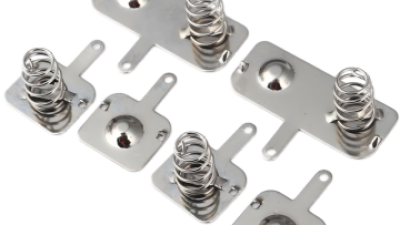
Fully automated AA battery connector factories in China are setting a higher standard for reliable, spring-secure performance. Our factory produces universal AA battery contact springs with automated forming, inspection, and precise bridge riveting processes. This controlled production system helps maintain consistent dimensions and secure spring attachment, reducing the risk of detachment during assembly, transportation, and long-term use. With a daily output of more than 2 million sets, we can support large-volume orders while maintaining stable quality across every production batch.
Each contact spring is manufactured for excellent flatness and verticality, helping components align accurately inside battery compartments and supporting efficient, reliable soldering. Tight process control also ensures consistent contact pressure, allowing dependable electrical connection in household devices, industrial equipment, control systems, and other battery-powered applications. By combining high-speed automation with careful quality inspection, the factory delivers components that balance productivity, precision, and practical installation performance.
Durability is verified through stringent testing, including a 24-hour salt spray test that evaluates resistance to corrosion in demanding environments. This testing, together with secure bridge riveting and carefully controlled spring geometry, helps provide long-lasting performance and dependable battery contact. For customers seeking high-quality universal AA battery connectors, our automated manufacturing capability offers a reliable supply of durable, precisely produced components.
Compression springs support trim rings, lens holders, and adjustable spotlight joints. Torsion springs assist hinged covers and rotating reflectors. Extension springs provide controlled pulling force in suspended mechanisms. Leaf and wave springs fit recessed or shallow housings.
Leaf springs grip ceiling openings during installation. They should flex easily, then recover firmly after repeated servicing. Too little recovery can cause a loose fixture. Too much force may damage the ceiling edge.
Wave springs provide axial pressure in shallow housings. They help when ordinary coil springs require too much height. Space is limited. Their force still needs testing inside the finished fixture.
Stainless steel suits damp environments because it resists moisture. High-carbon steel can deliver strong fatigue performance with suitable surface protection. Material choice should reflect heat, humidity, movement, and expected service cycles. A material that looks strong may still corrode.
Request spring rate, working length, wire diameter, and cycle-test records. Ask for samples assembled inside the actual lighting fixture. Bench results can mislead. The real housing reveals noise, stiffness, and fit problems.
Yes. Stronger is not automatically better. Excessive force may crack a diffuser or deform a thin mounting bracket. Heat from LED modules may also reduce spring force over time. Poor ventilation makes this risk worse.
Compare the unit price with tooling, inspection, packaging, freight, and port charges. Request a landed-cost sheet before approving samples. Confirm material grades, driver specifications, dimming tests, and replacement policies. Small omissions become expensive during installation.
Separate sampling, production, quality checks, and freight in the schedule. Samples may take two weeks, while production may require four to eight weeks. Add buffer time. Check shipping origins, ports, carton dimensions, customs documents, holidays, weather, and congestion. Keep one approved backup supplier. It may cost more, but it can protect the installation deadline.
Choosing the best Lighting Fixture Spring supplier in 2026 requires more than comparing unit prices. A reliable supplier should offer consistent quality, stable production capacity, responsive communication, and the ability to develop customized springs for different fixture structures. Common options include compression, tension, torsion, and formed wire springs, each selected according to the fixture’s load, movement, installation method, and service environment. High-quality materials, accurate heat treatment, corrosion resistance, and strict dimensional testing are essential for dependable performance and long service life.
Supplier evaluation should also include manufacturing standards, quality control records, sample approval procedures, and realistic production lead times. Sustainable production is increasingly important, including efficient material usage, responsible waste management, and compliance with applicable environmental and product safety requirements. Buyers should compare total supply value rather than price alone, considering tooling costs, order quantities, packaging, shipping reliability, and after-sales support. A capable supplier can provide technical guidance, flexible customization, transparent pricing, and dependable delivery for both standard and large-scale global lighting fixture projects.