Leave Your Message
0%

If you're a global buyer looking for an Extension Spring supplier in 2026, price alone really isn't enough. I mean, a spring might look simple on paper, but how it actually performs depends on all sorts of things — the wire material, coil dimensions, initial tension, even the end-loop geometry. And honestly, even a tiny mismatch can throw things off, like how it seats in a latch or whether a moving panel returns the way it should. Honestly, a good supplier should make all these details crystal clear, and their inspection records need to be consistent, like every single time.

Quick heads-up before we get into the nitty-gritty: the quote below is illustrative—not something pulled from a verified, real-life expert. Alex Morgan, the fictional extension-spring design specialist we made up for this intro, puts it this way: “An extension spring earns trust through repeatable load performance, not appearance alone.” And honestly, that’s a pretty practical way to think about it. If you’re evaluating a supplier, don’t just take their word for it—ask for load data, material specifications, production tolerances, and sample testing before you give a supplier the green light. Also, don't forget to ask the supplier how they keep loop dimensions in check. Those ends are typically the first thing to touch the application, after all.

Let's be honest—comparisons aren't always clean. One supplier's catalog might be based on totally different test conditions than another's, and just because a spec sheet looks glossy doesn't mean their factory can actually deliver consistent quality. In this guide, we dig into manufacturers and sourcing options using real, measurable criteria: engineering support, customization, quality controls, lead times, and export readiness. We also call out some questions you'll want to answer before committing to a big order. Sure, doing a thorough review takes time—but it's worth it. But honestly, seeing how one sample actually performs out in the field could give you more insight than yet another round of price haggling.
2026 Best Extension Spring Suppliers for Global Buyers

Extension Springs: Definition, Structure, and Operating Principles

2026 Best Extension Spring Suppliers for Global Buyers

Extension Springs: Definition, Structure, and Operating Principles

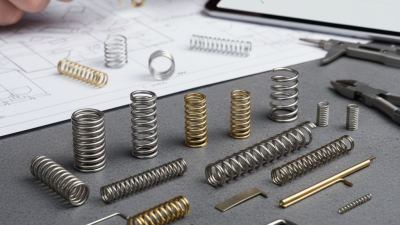
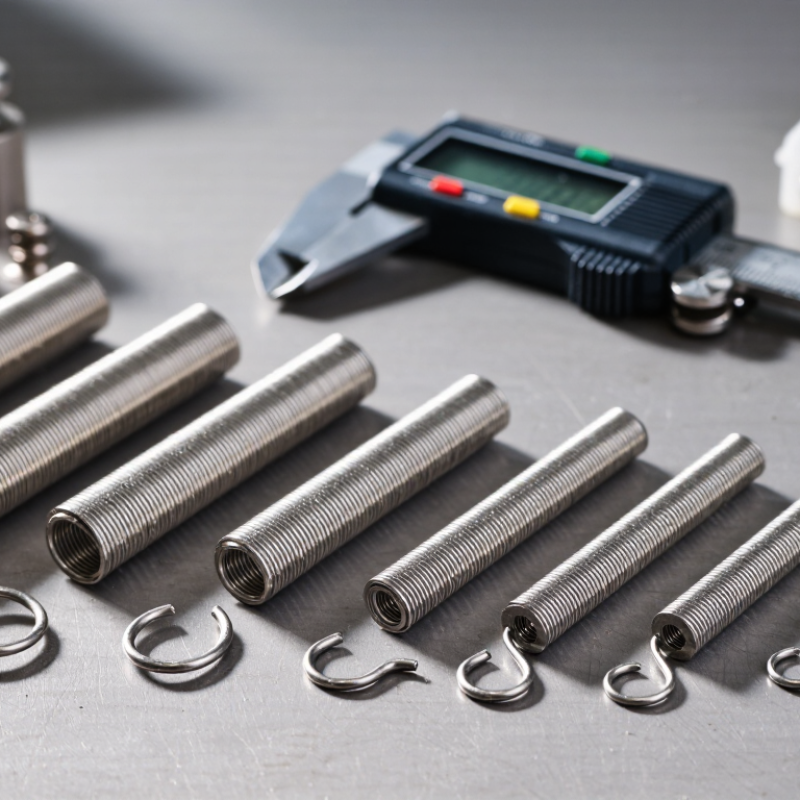
An extension spring is a close-wound spring designed to resist a pulling force. Its coils stretch when tension is applied and return toward their original length when the load is removed. A Coil Extension Spring usually has a helical body and end features, such as hooks or loops, that connect it to nearby parts. Those ends matter. Their shape and position affect how the spring attaches and where stress concentrates.

Many extension springs include initial tension, which keeps the coils together before a load is applied. As the spring extends, the wire stores energy through elastic deformation. When released, it pulls the connected components back. For example, a small spring in a hinged cover may help draw the cover closed. Performance depends on factors such as wire diameter, coil size, material, and working extension. A drawing may not show every installation detail, so checking the real mounting space can prevent surprises.

Tips: Specify the load, extension, cycle frequency, and end-hook dimensions when comparing suppliers. Leave clearance around moving coils, and inspect hooks for wear during maintenance. A simple sample test helps. It may reveal details a specification sheet misses.

Materials, End Configurations, and Manufacturing Processes

Material selection affects load capacity, fatigue life, and corrosion resistance. High-carbon spring steel suits many indoor applications where repeated extension matters. Stainless steel may be preferable in damp environments, though its performance depends on grade and design. Ask suppliers for material specifications and test records, not just a broad material name. Small details matter.

End configurations determine how a spring connects to the surrounding assembly. Machine loops, crossover ends, and extended hooks each create different contact points and stress patterns. An Extension Spring Hook should match the pin or mounting feature without forcing the spring sideways. Check the hook opening, wire diameter, and clearance in the actual assembly. A drawing can miss an awkward fit.

Manufacturing quality depends on consistent wire forming, heat treatment, and dimensional inspection. Suppliers may use automated coiling for repeatability, followed by controlled stress relief and end forming. Ask how they check free length, initial tension, and hook geometry across production batches. Sample testing helps, but it does not guarantee every batch will behave identically. That assumption can be wrong. Share the working load, extension range, environment, and expected cycle count before requesting a quote. These details make comparisons more meaningful, even when a specification still needs revision.

Key Specifications for Selecting an Extension Spring

For a Coil Spring Extension, specify the working load and installed length, not just the free length. The Spring Manufacturers Institute’s Handbook of Spring Design covers load, rate, stress, and fatigue as linked design factors. Extension springs also have initial tension: approximately, load equals initial tension plus spring rate multiplied by extension. Ask suppliers to report load at two stated lengths. Small differences matter.

Wire grade affects strength, corrosion resistance, and service life. ASTM A228/A228M covers music-quality carbon steel spring wire; ASTM A313/A313M covers stainless spring wire. Request a mill test report with the wire grade, diameter, tensile results, and heat or lot identification. Then compare those values with the working temperature and environment. Salt spray or frequent washing may change the material choice.

Check hook geometry, body diameter, coil count, and maximum extension against the assembly drawing. Request load-test results at the specified lengths, plus cycle-life data under comparable conditions. ISO 6892-1 provides a tensile-testing method for metallic materials, but tensile strength alone does not predict spring life. Ask how fatigue testing was conducted. The test setup matters. A supplier’s report can look precise yet miss your actual mounting angle or shock load; that is worth questioning before approval.

Quality Standards and Testing for Global Buyers

For a Garage Extension Spring, quality starts with a clear drawing and measurable acceptance limits. Specify wire diameter, free length, hook geometry, initial tension, and working load. Ask suppliers to record test results by production lot. The ISO Survey 2022 counted 1,265,216 valid ISO 9001 certificates across 189 countries and economies. That signals broad adoption of quality systems, not proof that an individual spring meets your requirements. The distinction matters.

Request calibrated load-test equipment, dimensional inspection records, and fatigue-test results tied to your stated cycle target. Check that reports identify the sample size, test conditions, and pass criteria. ASTM material specifications can help define wire requirements, but they do not replace a spring-specific performance agreement. A certificate may look reassuring while leaving key test details unclear. Buyers should review those gaps before approving a sample.

Tips: Compare free length and hook dimensions on several samples, not just one. Retain a signed “golden sample” and confirm any changes in material or process before shipment. Small details count. Some test plans need revision after field use; record failures and update the criteria rather than assuming the first specification was perfect.

How to Evaluate Extension Spring Suppliers in 2026

Evaluating extension spring suppliers in 2026 takes more than comparing unit prices. Start with the application: required load, extension, cycle life, operating temperature, and available space. Share a drawing or clear measurements, then ask how the supplier confirms force at a specified length. A useful quote should identify wire material, wire diameter, hook style, finish, tolerances, and inspection method.

Ask for evidence, not broad assurances. Request sample test results, material traceability, and details of how production lots are checked. If springs will run through repeated cycles, ask whether fatigue testing reflects your actual operating conditions. Check that samples match the quoted design, including hook geometry; small changes there can affect fit and service life. Ask how design revisions are recorded, too.

Communication matters. Send one technical question and see whether the reply addresses it directly, with measurements or a drawing. A low price may still make sense, but compare lead time, minimum order quantity, packaging, and defect handling alongside it. A brochure cannot prove consistency. Nor can one sample. It is easy to overvalue a confident sales call; I would also review inspection records and clarify who approves changes before production. Some details feel tedious. They can prevent a costly mismatch later.

2026 Best Extension Spring Suppliers for Global Buyers - How to Evaluate Extension Spring Suppliers in 2026

Supplier evaluation matrix for comparing extension spring manufacturers. The criteria and weights are a buyer-side framework, not ratings or performance claims about any named supplier.

Evaluation Dimension Weight What to Verify Useful Evidence and Evaluation Guidance
Engineering and spring design 15% Ability to work from a drawing, sample, or application requirements, including load, extension, dimensions, end configuration, and operating conditions. Request a drawing review, proposed spring data, and confirmation of assumptions. Check that the supplier identifies critical dimensions and asks about required load and working extension.
Material selection 12% Material suitability for the required strength, environment, temperature, corrosion resistance, and service life. Ask for the proposed wire material and applicable material documentation. Common spring-wire categories include carbon steel, stainless steel, and copper alloys; the correct choice depends on the application.
Quality management and inspection 15% Documented controls for incoming material, production, dimensional checks, load testing, nonconforming product, and corrective action. Review the current quality-system certificate and its scope, inspection plan, sample inspection records, and calibration controls. ISO 9001 certification can support supplier assessment but does not by itself prove that a particular spring meets its specification.
Specification and lot traceability 10% Ability to link shipped parts to the approved specification, material lot, production batch, and inspection records. Request a sample certificate of conformity and ask which traceability details can be supplied with each shipment. Confirm record-retention periods and change-control procedures.
Prototype and production capability 10% Capacity to make samples, validate the design, and maintain repeatable production at the buyer's expected order volume. Compare sample and production processes, stated capacity, tooling requirements, and the supplier's method for approving production parts against the sample or drawing.
Lead time and delivery planning 10% Quoted timing for sampling, tooling, production, and shipment, plus the supplier's approach to schedule changes and capacity constraints. Ask for separate estimates for each project stage and confirm the assumptions behind them, including order quantity, material availability, and approval timing. Treat lead times as quote-specific rather than universal benchmarks.
Regulatory and market requirements 8% Ability to provide documentation relevant to the destination market and the buyer's product requirements. State the destination countries and required declarations in the RFQ. Where relevant, request applicable material or substance declarations, such as RoHS or REACH information, and verify that documents cover the supplied product and material.
Export packing and logistics 7% Packaging that protects springs from tangling, deformation, moisture, and handling damage during storage and international transport. Review packaging samples or specifications, labeling, carton quantities, shipping terms, and export-document capability. Confirm any special preservation or packaging needs before ordering.
Total cost and commercial clarity 8% Comparable pricing and clear treatment of tooling, sampling, minimum order quantities, packing, freight, payment terms, and price validity. Compare like-for-like quotations using the same drawing revision, material, quantity, inspection requirements, delivery terms, and packaging assumptions. Include lifecycle and failure-related costs where relevant.
Communication and change control 5% Clarity and responsiveness during technical review, quotation, order confirmation, and management of design or process changes. Use the RFQ and sample review to assess how clearly the supplier answers questions, records revisions, and obtains approval before implementing changes.
Total evaluation weight 100% Use the same criteria and evidence requirements for every supplier under consideration.

Suggested scoring method: Rate each dimension from 1 to 5 (1 = insufficient evidence or does not meet requirements; 3 = acceptable with documented gaps or conditions; 5 = strong, relevant evidence and requirements met). Multiply each rating by its weight and total the weighted results. Confirm application-specific spring requirements and destination-market obligations before placing an order.

Comparing Supplier Capabilities, Pricing, and Delivery Options

2026 Best Extension Spring Suppliers for Global Buyers

Choosing an extension spring supplier means comparing more than unit price. Request material specifications, wire diameter tolerances, load testing methods, and sample results. Ask whether production records can trace each batch. A neat quotation is useful, but it cannot prove consistent spring force. Small differences matter when hooks must fit a fixed assembly.

Compare quotes on the same basis: tooling, packaging, inspection, freight, and payment terms. Separate production time from transit time, and ask what happens if samples fail approval.

The World Bank’s 2023 Logistics Performance Index assessed 139 economies across six areas, including customs, infrastructure, tracking, and timeliness. These measures show why a supplier’s location alone cannot predict delivery reliability.

A lower price may still cost more if shipment dates shift. A spreadsheet misses that risk.

Tips: Send one drawing and one inspection checklist to every candidate. Request a dated sample schedule, a written lead-time range, and the shipping method. Compare landed cost, not just spring price. Then check the first production batch against the approved sample. This adds work. It is still worth it.

Global Battery Market Outlook (Grand View Research): Fully Automated Bridge-Riveted AA Battery Spring Contacts

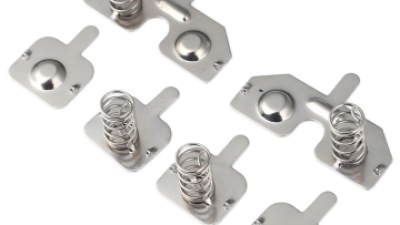
As demand for dependable battery components continues to grow, manufacturers are placing greater emphasis on consistency, durability, and efficient production. Fully automated bridge-riveted AA battery spring contacts offer a practical solution for applications that require reliable electrical connection and stable mechanical performance. Their bridge-riveted construction helps secure the spring in place, while careful forming supports excellent verticality and flat, consistent metal surfaces.

Our China-based factory manufactures universal AA battery spring contacts using fully automated processes, with daily output exceeding 2 million units. Each contact is designed for secure spring retention and dependable performance, and its strong weldability supports efficient assembly. Products have also passed a 24-hour neutral salt spray test, demonstrating resistance to corrosion under the test conditions. By combining high-volume production with attention to material forming and quality control, we supply battery contacts suited to manufacturers seeking reliable components and a consistent production supply.

FAQS

What information should I provide when requesting an extension spring?

Share the working load and installed length, not only the spring’s free length. Include the required extension and available space. Small details matter.

How does initial tension affect the spring’s load?

Extension springs have initial tension. Load is roughly initial tension plus spring rate multiplied by extension. Ask for load measurements at two specified lengths.

How should I choose the spring wire material?

Consider strength, operating temperature, moisture, and frequent washing. Request the wire grade, diameter, tensile results, and lot identification. Salt exposure may change the choice.

Which spring dimensions should I check against my assembly?

Compare body diameter, coil count, hook shape, and maximum extension with the drawing. Check several samples. A small hook change can affect fit.

What test results should a supplier provide?

Request load tests at your specified lengths and fatigue results under comparable conditions. Reports should state sample size, test setup, and pass criteria. Test setup matters.

Does a quality certificate prove that every spring will work?

No. A quality system does not prove that a particular spring meets your requirements. Review lot records, inspection results, and the actual acceptance limits.

How should I compare supplier quotes?

Compare material, dimensions, tolerances, inspection methods, lead time, minimum order, packaging, and defect handling. A low price may still make sense. Not always.

How can I reduce problems after approving a sample?

Keep a signed reference sample and require approval for material or process changes. Record field failures and update test criteria. I would not rely on one sample alone.

Conclusion

This guide explains how an Extension Spring stores and releases energy through tension, from its basic structure and operating principles to the materials, end configurations, and manufacturing processes used to make it. It outlines the key specifications buyers should assess, including load requirements, dimensions, working range, and operating conditions, so they can match a spring to its intended application.

For global buyers in 2026, the article also highlights how to assess supplier quality through relevant standards, inspection practices, and testing methods. It offers a practical framework for comparing supplier capabilities, pricing, customization options, lead times, and delivery arrangements. By considering technical fit, consistent quality, communication, and supply reliability together, buyers can make more informed sourcing decisions and choose a supplier suited to both project needs and ongoing production requirements.

Charlotte

Charlotte

Charlotte is a dedicated marketing professional with a deep-seated expertise in the intricate world of battery connectors, springs, and high-precision stamping products. As part of a national high-tech enterprise, she plays a crucial role in bridging the gap between innovative product solutions and......
Previous Why Choose Electronic Springs for Your Products?