Leave Your Message
0%

Global sourcing can make buying Compression Spring trickier than it looks. A drawing might seem simple enough, but wire diameter, coil pitch, material, plating, fatigue life—all of it can change performance in a big way.

That's why disciplined buying matters, and market estimates help explain why. Grand View Research valued the global spring market at about USD 23 billion in 2023. Fortune Business Insights also expects growth to continue through the decade, fueled by automotive, industrial equipment, aerospace, and medical applications. But these numbers cover many spring types, not just Compression Spring products. That distinction is important. Market reports are useful for direction, sure—but buyers should still push back on broad categories and rosy forecasts.

A.M. Wahl, a leading spring-design authority, put it well in Mechanical Springs: "The design of springs is more of an art than a science." That advice still holds up. A supplier's catalog rate alone won't cut it. Buyers need load-at-length data, solid height, free length, tolerance, cycle requirements, and material traceability. And yes, ask for test records.

Small details matter, too. A spring installed next to a hot motor may lose force faster than expected. A bright finish can look great but fail in a humid warehouse. These aren't dramatic mistakes—they're expensive ones.

So here's a guide with 10 Compression Spring buying tips for global buyers. It looks at technical fit, supplier capability, quality evidence, packaging, communication, and total landed cost. No checklist will erase uncertainty completely. Some assumptions will still need testing. That's the honest part. A sample order, dimensional inspection, and fatigue validation often tell you more than a polished quotation ever will.
10 Compression Spring Buying Tips for Global Buyers

Define Compression Spring Types, Materials, and Core Applications

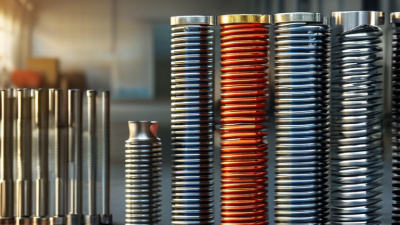
Compression springs store energy when axial force shortens their length. Global buyers should identify the spring type before comparing prices. Common choices include cylindrical, conical, barrel, and hourglass designs. A Conical Compression Spring can reduce coil binding and fit compact assemblies.

Material selection depends on load, temperature, corrosion, and cycle frequency. Carbon steel suits many indoor mechanisms and general equipment. Stainless steel performs better in humid or mildly corrosive environments. High-temperature alloys may be necessary near engines, ovens, or industrial heaters. Do not judge material by appearance alone. Surface treatment, wire diameter, and heat treatment also affect service life.

Application details make specifications useful. Record free length, compressed length, outside diameter, spring rate, and working cycles. Check whether the spring may reach solid height during operation. That mistake can cause early fatigue. In one equipment review, a spring looked correctly sized but lost force after repeated compression. The overlooked issue was excessive stress near maximum travel. Ask suppliers for load testing, dimensional inspection, and material documentation. Tolerance requirements should be written clearly, especially when parts cross borders. Packaging also matters; loose springs can tangle, scratch, or deform during shipment. A perfect drawing still needs practical testing.

10 Compression Spring Buying Tips for Global Buyers

Compare representative shear modulus values for common compression-spring materials. A higher shear modulus generally indicates greater stiffness for the same spring geometry, while corrosion resistance, temperature capability, fatigue life, and availability should also guide material selection.

Buying guidance: Define the spring type first—cylindrical, conical, barrel, or hourglass—then specify load, working deflection, solid height, free length, wire diameter, end style, operating temperature, environment, and required cycle life. Common materials include music wire, stainless steel, phosphor bronze, and nickel-chromium alloys.

Identify Load, Length, Diameter, and Force Requirements

10 Compression Spring Buying Tips for Global Buyers

Identify Load, Length, Diameter, and Force Requirements

A compression spring should be specified by its working conditions, not appearance alone. Start with the required load at the operating length. Measure free length, solid height, outer diameter, and inner diameter carefully. A spring that looks correct may coil-bind before reaching its target position. That mistake can damage nearby parts.

Tip: Draw the compressed position.

Record the force at one or two working lengths. This helps suppliers calculate the spring rate and verify performance. Include the wire diameter, number of active coils, end style, and material requirements. For a Tiny Compression Spring, small dimensional changes can create noticeable force differences. Use a calibrated force tester when possible. Rulers are useful, but not enough for final approval.

Tip: Request force data, not estimates.

Global buyers should also define tolerance, surface finish, temperature exposure, and packaging needs. Stainless materials may suit humid environments, while other applications require different specifications. During sourcing, check inspection reports against the drawing and sample measurements. I have learned that unclear drawings cause more delays than difficult manufacturing. Still, even a detailed drawing can miss installation space or side movement. Test the spring inside the real assembly before approving a larger order. Keep a measured sample for future comparison.

Evaluate Spring Quality, Tolerances, and Performance Standards

10 Compression Spring Buying Tips for Global Buyers

Evaluate Spring Quality, Tolerances, and Performance Standards

A reliable compression spring begins with traceable material. Request the material grade, heat-treatment records, and production inspection data. Check wire diameter, free length, outside diameter, coil pitch, and end squareness against the approved drawing. Small deviations can change installed force. Measure both.

Do not judge quality from appearance alone. Inspect for cracks, sharp burrs, uneven coils, and surface damage. Ask how force is tested at the specified working height. The report should identify equipment, test temperature, sampling frequency, and acceptance limits. A spring may pass one load test yet fail after repeated cycling. Test under load.

Tolerance decisions deserve practical attention. Tight tolerances can improve fit, but they may increase cost without improving service life. Define critical dimensions separately from acceptable cosmetic variation. Use recognized engineering standards, such as applicable ISO or ASTM requirements, while keeping the final drawing specific. Standards guide decisions; they do not replace them.

Performance verification should match the real application. Review fatigue life, permanent set, corrosion exposure, temperature range, and maximum deflection. Ask for sample testing before approving large quantities. Compare measured force with the design curve, not only one data point. I would also challenge optimistic cycle claims when testing uses gentle conditions. That uncomfortable question often reveals missing details. Keep inspection records linked to each production lot for later review.

10 Compression Spring Buying Tips for Global Buyers - Evaluate Spring Quality, Tolerances, and Performance Standards
A practical procurement checklist for comparing compression springs by material, geometry, dimensional accuracy, load performance, durability, and inspection requirements.
No. Buying Tip Evaluation Dimension Recommended Benchmark or Target How to Verify Common Risk
1 Define the complete spring specification before requesting quotations. Geometry and operating requirements Specify wire diameter, outside or inside diameter, free length, active coils, total coils, end style, installation length, working length, and required load points. State the operating temperature, environment, and expected cycle count. Review a controlled drawing or specification sheet. Confirm that all dimensions use the same unit system and that the spring fits the available cavity and guide arrangement. Incomplete specifications can produce a spring that fits physically but does not deliver the required force or life.
2 Select material according to load, environment, and temperature. Material grade and condition Use music wire for many general-purpose, high-strength applications; stainless spring wire such as grades covered by ASTM A313 for corrosion resistance; and corrosion-resistant or heat-resistant alloys when the service environment requires them. Confirm the applicable material standard and heat-treatment condition. Request material certificates showing chemical composition, mechanical properties, heat or lot identification, and compliance with the agreed standard. A material selected only for tensile strength may fail prematurely because of corrosion, hydrogen exposure, elevated temperature, or relaxation.
3 Check the spring index to balance manufacturability and performance. Spring index, calculated as mean coil diameter divided by wire diameter A spring index of approximately 4 to 12 is commonly practical. Lower values increase forming difficulty and stress concentration; much higher values can increase instability and handling challenges. The final acceptable range should be confirmed by design analysis. Calculate the index from the drawing dimensions and review the design using a recognized spring-design method or validated engineering software. An extreme index can cause poor dimensional control, surface damage during coiling, or unexpectedly high stress.
4 Compare spring rate and load at defined test lengths. Force, deflection, and spring rate Define at least two load points, such as force at installation length and force at working length. For a linear spring, the nominal rate is approximately the change in force divided by the change in deflection. Use application-specific tolerances rather than assuming every spring has the same rate tolerance. Require a calibrated load-versus-deflection test using specified test lengths, loading speed, seating method, and measurement uncertainty. Comparing force values measured at different lengths or with different test methods can create misleading supplier comparisons.
5 Confirm dimensional tolerances against a recognized spring standard. Free length, diameter, wire diameter, squareness, and pitch Use an agreed standard such as EN 15800 for cylindrical helical compression springs where applicable, or define drawing-specific tolerances. Tighter tolerances generally increase tooling, inspection, and unit cost. Review the supplier’s inspection plan and dimensional report. Verify the measurement method for free length, coil diameter, end squareness, and wire diameter. Unspecified tolerances may be interpreted differently by the buyer and supplier, especially across regions using different standards.
6 Evaluate solid height and prevent coil bind during operation. Solid height, working deflection, and safety margin Keep the maximum operating compression below solid height. A practical design should include a defined clearance margin, with the exact value based on the application, manufacturing tolerance, dynamic effects, and allowable stress. Compare the maximum compressed length with the measured or calculated solid height, including dimensional variation. Test the spring at the actual assembly stroke where possible. Coil bind can create a sharp rise in force, permanent set, noise, guide damage, or rapid fatigue failure.
7 Assess fatigue life and allowable stress for cyclic applications. Alternating stress, mean stress, and cycle requirement Define the required life, such as a specified number of cycles, together with minimum and maximum operating lengths. The design should be checked against appropriate fatigue data for the selected material, surface condition, and manufacturing process. Request fatigue test results or validation samples tested under representative load, stroke, frequency, temperature, and assembly conditions. Static load capacity does not demonstrate endurance under repeated compression, vibration, or impact.
8 Inspect surface quality, residual stress, and finishing. Surface defects, shot peening, coating, and corrosion protection Specify acceptable limits for seams, laps, cracks, rust, burrs, and handling marks. For fatigue-critical parts, consider stress-relieving and shot peening where suitable. Select plating or coating based on corrosion requirements and hydrogen-embrittlement risk. Use visual inspection, dimensional inspection, coating-thickness checks, salt-spray or environmental testing where relevant, and process records for stress relief or shot peening. A visually attractive coating may still conceal poor base-wire quality or introduce hydrogen-related failure in susceptible high-strength steel.
9 Require traceability and a documented quality-control plan. Batch control, sampling, and nonconformance management Each production lot should be traceable to raw material, manufacturing date, tooling or process setup, inspection results, and quantity released. Agree on sampling criteria and acceptance limits before mass production. Audit the inspection plan, lot records, calibration certificates, first-article or approval reports, and corrective-action process. Without lot traceability, it is difficult to isolate defective batches or determine whether a field failure is material-, process-, or handling-related.
10 Validate packaging, logistics, and incoming inspection for global supply. Packaging condition, shipment stability, and receiving controls Use dry, clean, non-abrasive packaging that prevents tangling, deformation, moisture exposure, and mixed-lot identification. Define storage conditions and an incoming inspection plan for critical dimensions and load performance. Approve packaging samples, inspect shipment labels and lot numbers, and perform receiving checks using calibrated gauges and a documented sampling plan. Springs can be damaged, corroded, mixed, or permanently deformed during long-distance transport and unsuitable storage.
Procurement note: The numerical ranges and standards above are general engineering guidance. Final acceptance criteria should be defined on the approved drawing or purchase specification according to the spring’s material, geometry, load profile, environment, safety class, and applicable regulatory requirements.

Compare Suppliers, Manufacturing Capabilities, and Customization Options

For Coil Spring Compression applications, global buyers should compare suppliers beyond quoted price. Request evidence of wire-grade control, heat treatment, dimensional inspection, and load testing. A reliable supplier can explain its process clearly, from coiling and stress relief to surface finishing. Ask how often equipment is calibrated and whether inspection records follow each production batch.

Manufacturing capacity matters when prototypes become regular orders. Review machine ranges for wire diameter, spring index, free length, and production volume. A supplier producing 5,000 pieces should not promise 500,000 without discussing tooling, lead time, and quality controls. Check fatigue testing, salt-spray results, and packaging for long-distance shipping. Small details matter.

Customization should be practical, not merely attractive. Compare options for end shapes, pitch, coating, preload, and target load. Share a drawing with tolerances, working height, and operating temperature. Then ask for a first-article sample and a measured test report. I have seen polished samples hide weak documentation. That is a warning. Still, buyers can miss important requirements when specifications change late. A short technical review before ordering can expose unclear tolerances, unsuitable materials, or unrealistic delivery promises. Supplier references, traceable certificates, and transparent corrective-action records provide stronger confidence than sales claims.

Verify Global Compliance, Testing, Packaging, and Documentation

10 Compression Spring Buying Tips for Global Buyers

Global buyers need more than a spring drawing. Define load, rate, free length, solid height, wire diameter, and working travel. Confirm tolerances in writing. Ask for material certificates and applicable country requirements. Do not accept “international standard” without a named standard. Verify corrosion, temperature, and fatigue expectations before approving a quote. Small detail, big impact. Request samples from the intended production process, not a hand-finished prototype. Measure force at several travel points. Record equipment calibration dates. Require test reports showing methods, sample sizes, results, and acceptance limits. Independent testing can expose gaps, although it adds time and cost. That trade-off deserves a clear decision.

Use moisture-resistant bags, separators, and rigid cartons. Springs can tangle, scratch, or lose shape during long transit. Specify carton weight, label language, lot number, and quantity. Ask for photos before shipment. Require packing lists, invoices, certificates, inspection records, restricted-substance declarations, and relevant country-specific documents. Keep document names consistent. Customs delays often begin with mismatched descriptions. Traceability matters. Each carton should link to a batch and test record.

Check supplier controls through a remote audit or qualified inspection. Review material storage, coiling settings, heat treatment, and final gauging. Confirm how nonconforming parts are isolated. Agree on change notification before purchase. A different wire source may alter performance. No checklist is perfect. Revisit it after the first shipment. Buyers sometimes overlook packaging validation because the parts look simple. That assumption is costly. Photograph opened cartons, inspect random lots, and compare results with the approved sample before releasing future orders.

Assess Pricing, Lead Times, Shipping, and After-Sales Support

When buying Metal Compression Spring globally, treat the quoted price as a starting point, not the final cost. The World Bank’s April 2024 Commodity Markets Outlook projected a 5% decline in metals prices during 2024. However, steel surcharges, tooling, plating, packaging, and currency changes can quickly reverse that saving. Request a material certificate, price-validity period, and a landed-cost estimate. I also compare at least three quotations. One low offer is rarely enough evidence.

Lead times need written detail. Ask for sampling, tooling, production, inspection, and dispatch dates separately. A practical buffer of 10–15% can protect critical assembly schedules. This is imperfect, but factory promises often exclude inspection delays. UNCTAD’s Review of Maritime Transport 2024 noted that route disruptions increased voyage distances, fuel use, and schedule uncertainty. Therefore, confirm the shipping mode, port pair, Incoterm, carton dimensions, and backup route before placing an order.

After-sales support should be measurable. Require a documented inspection plan, spring-load test results, traceability codes, and a response time for complaints. For repeated orders, agree on replacement quantities and corrective-action deadlines. ISO 9001-based procedures are useful, but certification alone does not prove reliable service. Send a real assembly drawing and test conditions. Vague specifications create avoidable disputes. I once focused too heavily on unit price and overlooked packaging damage; that mistake made the “cheaper” shipment more expensive.

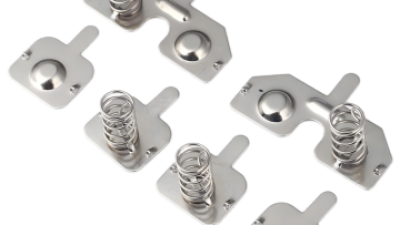
Automated AA Battery Spring Connectors: Durable Bridge-Riveted Solutions from China Suppliers’ Factories

Automated AA Battery Spring Connectors: Durable Bridge-Riveted Solutions from China Suppliers’ Factories

The rapid expansion of battery-powered electronics is increasing demand for dependable, cost-efficient contact components. According to the International Energy Agency’s *Global EV Outlook 2024*, global electric-vehicle battery demand reached approximately 750 GWh in 2023, rising by about 40% year on year. Although AA battery contacts serve smaller devices, this industry trend reinforces the importance of stable electrical connections, consistent metal forming, and scalable manufacturing.

Our universal AA battery spring contacts are produced in a China-based factory through fully automated processes, supporting a daily output exceeding 2 million units. Their bridge-riveted construction provides secure spring retention, while high verticality and excellent metal flatness help maintain reliable contact pressure during assembly and use. The components also offer strong weldability for efficient integration into battery holders, household electronics, toys, measuring instruments, and portable equipment. Quality validation includes a stringent 24-hour neutral salt spray test, helping demonstrate resistance to corrosion in demanding storage and operating environments. Manufactured with process consistency and supplier-level capacity in mind, these contacts provide a practical solution for buyers seeking durable, repeatable, and production-ready battery connection components.

FAQS

What material information should buyers request for compression springs?

Request the material grade, heat-treatment records, and production inspection data. Traceability matters. Each lot should connect to its material certificate and test results.

Which spring dimensions require careful inspection?

Measure wire diameter, free length, outside diameter, coil pitch, and end squareness. Check solid height and working travel too. Small deviations can change installed force.

How should spring force be tested?

Test force at the specified working height and several travel points. Record the equipment, calibration date, temperature, sample size, and acceptance limits. One load point is not enough.

What visual defects should buyers look for?

Inspect for cracks, sharp burrs, uneven coils, scratches, and surface damage. Do not judge quality by appearance alone. Look closer.

How can buyers evaluate fatigue performance?

Match testing to the real application’s load, travel, temperature, and cycle frequency. Check fatigue life, permanent set, and maximum deflection. Gentle testing may create optimistic claims.

Are tight tolerances always better?

No. Tight tolerances may improve fit but increase cost without extending service life. Separate critical dimensions from acceptable cosmetic variation. The drawing must stay specific.

What should buyers verify before approving large quantities?

Request samples made through the intended production process. Compare measured force with the design curve. Review inspection records before releasing the order.

How should compression springs be packaged for international shipping?

Use moisture-resistant bags, separators, and rigid cartons. Springs can tangle, scratch, or lose shape during transit. Specify carton weight, labels, quantity, and lot numbers.

Which documents support shipment traceability?

Keep packing lists, invoices, material certificates, inspection reports, and relevant declarations. Descriptions must match across every document. Mismatched details can delay customs processing.

How should buyers manage price and delivery uncertainty?

Compare at least three quotations and request a landed-cost estimate. Include tooling, treatment, packaging, transport, and currency changes. Add a practical schedule buffer. Promises can slip.

Conclusion

Buying the right Compression Spring requires more than selecting a standard size. Global buyers should first understand the available spring types, material options, and intended applications, then define essential specifications such as load, free length, outer diameter, working length, wire diameter, and required force. Clear requirements help prevent performance problems and ensure the spring operates reliably within its expected conditions.

Quality should be evaluated through dimensional tolerances, fatigue resistance, surface treatment, testing procedures, and applicable performance standards. Buyers should also compare suppliers based on manufacturing experience, production capacity, quality control, and ability to provide customized designs. Before placing an order, verify compliance documents, inspection reports, packaging methods, and export documentation. Finally, assess total purchasing costs, minimum order quantities, production lead times, shipping arrangements, communication efficiency, warranty terms, and after-sales support. A careful review of these factors can reduce procurement risks and support stable long-term performance across international applications.

Charlotte

Charlotte

Charlotte is a dedicated marketing professional with a deep-seated expertise in the intricate world of battery connectors, springs, and high-precision stamping products. As part of a national high-tech enterprise, she plays a crucial role in bridging the gap between innovative product solutions and......
Previous 7 Best Toy Spring Suppliers for Global Buyers?