Leave Your Message
0%

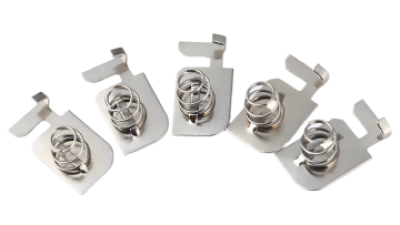
China’s Battery Spring Plate industry plays a crucial role in supporting a wide range of things — from portable gadgets and vehicle systems to storage devices and industrial controls. These tiny metal parts might be small, but don’t let their size fool you — they’re key to keeping electrical contact stable, even when subjected to vibration, heat, or battery swaps. Honestly, their importance isn’t something you should overlook.

In this overview, I want to walk you through some of the top Chinese manufacturers, using straightforward buying criteria. We’ll look at things like how precise their stamping processes are, the spring force they deliver, the materials they choose, surface treatments, and whether their production is consistent. Common materials include stainless steel, phosphor bronze, and nickel-plated alloys, each bringing different perks like conductivity, corrosion resistance, flexibility, and longevity. When selecting suppliers, it’s really important to ask for detailed drawings, inspection records, material certificates, and batch traceability — those little bits of info can save you a headache later.

Some well-known manufacturers like Dongguan LML Metal Products, Shenzhen KingTop Technology, and Xiamen Morrow Technology are often looked at for custom metal parts. But don’t just take their word for it—remember, the real proof is in testing samples, reviewing dimensional reports, and having honest conversations about tolerances. A good Battery Spring Plate should fit snugly without risking damage to the battery casing, and it needs to keep a stable contact even after repeated compression cycles — that’s the real test.

Of course, price is always on people’s minds, but it shouldn’t be the only thing you consider. Cheaper parts might save you bucks upfront but could cause inconsistent pressure, corrode faster, or lead to more returns and complaints down the line. And let’s be honest — no supplier is perfect. Sometimes, product specs they publish are incomplete or kinda hard to compare. That’s why this guide focuses on actual evidence, not just fancy marketing talk. We’re looking at their manufacturing experience, how responsive they are technically, their quality control, and their ability to meet realistic delivery timelines.

At the end of the day, the best choice really depends on what you need it for—size, fit, durability—more than just how big or cheap the company is. Taking the time to qualify your options really pays off. Remember, it’s the little details that make or break reliability — don’t overlook them.
Top Battery Spring Plate Manufacturers in China

China’s Battery Spring Plate Industry: 18650 and 21700 Cell Applications

China’s battery spring plate industry supports compact packs built around 18650 and 21700 cylindrical cells. A Battery Spring Contact Plate creates a compliant electrical path between the cell terminal and circuit assembly. For 18650 packs, narrow spacing makes dimensional control especially important. For 21700 designs, larger cell diameter and higher current demand can change plate thickness, spring height, and contact pressure. Manufacturers commonly use stamped nickel-plated steel, stainless steel, or copper-based alloys.

Experienced Chinese suppliers begin with cell drawings, pack tolerances, and expected current before selecting tooling. They check burrs, flatness, plating coverage, and spring recovery during inspections. A practical sample review should include repeated compression, vibration exposure, and temperature cycling. Small deviations matter. An uneven contact may increase resistance, create local heating, or loosen after assembly. Weld tabs and mounting holes must align with the holder, busbar, and protection circuit.

For buyers comparing top battery spring plate manufacturers in China, traceability deserves as much attention as price. Ask for material certificates, dimensional reports, and documented process controls. Factory visits or independent audits can reveal press maintenance, plating consistency, and operator training. Still, test data is not the whole story. Real battery packs face dust, repeated charging, and assembly variation. A common field lesson is that a plate may pass bench checks yet require redesign after enclosure testing. That limitation deserves honest review. Reliable suppliers respond with measured changes, especially when 18650 and 21700 platforms share one production line.

Battery Spring Plate Materials: SPCC Steel, Stainless Steel, and Nickel Plating

Top Battery Spring Plate Manufacturers in China

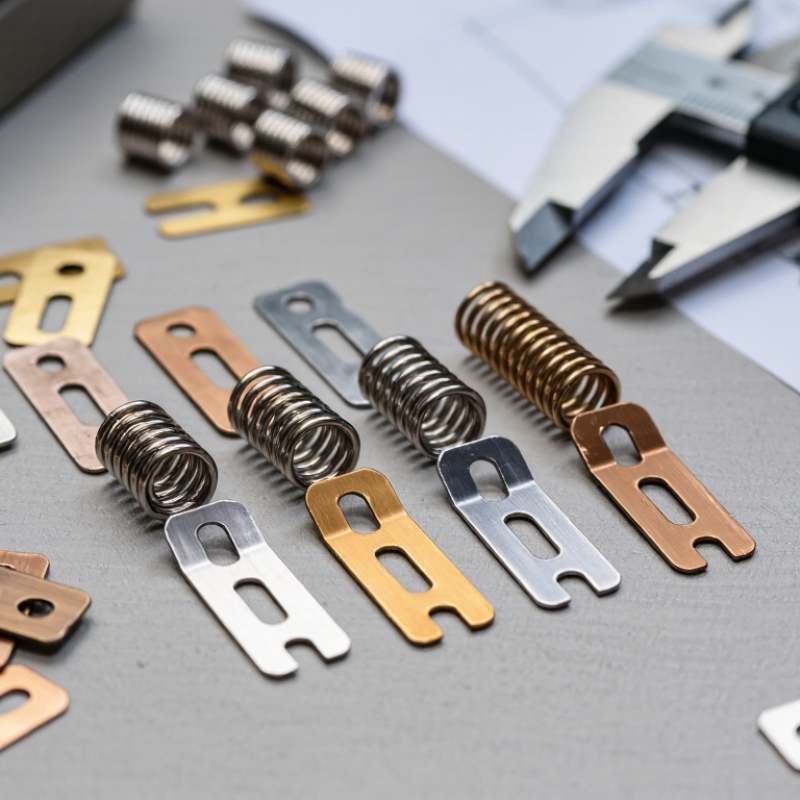
Material selection often separates reliable battery spring plates from short-lived parts. SPCC steel is cold-rolled, economical, and easy to stamp. It suits dry battery compartments and moderate mechanical loads. However, exposed SPCC can oxidize quickly without suitable protection. Stainless steel offers stronger corrosion resistance and stable spring performance. It costs more and may require tighter tooling control. The choice is not always obvious.

Nickel plating adds a protective, conductive surface to steel or stainless components. It can improve contact durability and reduce surface discoloration. The IEA Global EV Outlook 2024 reported that global battery demand exceeded 750 GWh in 2023. This growth increases pressure on suppliers to control consistency, not only price. The USGS Mineral Commodity Summaries 2024 estimated global nickel mine production at about 3.6 million metric tons in 2023. Nickel pricing can therefore affect plating budgets. A thin coating may save money, but poor coverage can create contact failures. That risk deserves testing.

Tips: Ask manufacturers for material certificates, plating thickness records, salt-spray results, and spring-force data. Check burrs under magnification. Measure contact resistance after repeated compression. Do not assume stainless steel always performs better; its spring recovery, grade, and forming condition matter. I have seen specifications focus on thickness while ignoring temper. That is an avoidable gap. Third-party inspection is useful when production volumes increase.

Key Manufacturing Processes: Stamping, Forming, and ±0.05 mm Dimensional Control

Battery spring plates look simple, but their performance depends on controlled metal flow.

In China, capable manufacturers combine precision stamping with carefully managed forming operations. Flat strip becomes a functional contact. Stamping creates the outline, holes, and locking features with high repeatability. Progressive dies can reduce handling, yet worn punches quickly leave burrs or distorted edges. Technicians should monitor press force, strip alignment, and tool clearance during production. Small changes matter.

Forming then gives the plate its spring angle and contact pressure.

Over-bending may improve initial force, but it can shorten fatigue life. That trade-off must be tested with the actual battery holder, not only a drawing. Material selection also matters. Stainless steel and plated spring materials offer different conductivity, corrosion resistance, and recovery. Reliable factories verify incoming coil thickness and hardness before approving a batch.

For battery spring plates, ±0.05 mm dimensional control is meaningful only when measurement methods remain stable. Coordinate measuring machines, gauges, and first-article checks should support regular sampling. Operators should record results, not merely pass parts by appearance. A clean surface is not proof of correct force.

Some production plans still overemphasize tolerance and undercheck spring behavior. That is a weakness worth correcting. Practical supplier evaluation should include die maintenance records, capability data, traceability, and test samples. Ask how defects are contained when a dimension drifts. This answer often reveals more than a polished factory tour.

Top Chinese Manufacturers Assessed by ISO 9001, IATF 16949, and RoHS Compliance

Chinese battery spring plate manufacturers are increasingly judged by documented compliance, not quotations alone. The ISO Survey 2022 recorded 1,265,216 ISO 9001 certificates worldwide, including 426,716 in China. This scale shows strong quality infrastructure, but certification scope still matters. Buyers should verify whether it covers stamping, plating, heat treatment, and final inspection.

For automotive supply, IATF 16949 signals stronger process discipline. A qualified Battery Clamp Plate supplier should provide control plans, PFMEA records, gauge calibration, and traceable material batches. IATF requirements also support defect prevention across tooling changes and repeat production. The IEA Global EV Outlook 2024 reported nearly 14 million electric car sales in 2023. That growth increases pressure on tiny components, where spring force, burr control, and corrosion resistance can affect assembly reliability. RoHS compliance must also be evidenced through supplier declarations and test reports. The EU RoHS framework restricts ten substances, including lead, mercury, and certain flame retardants.

Tips: Request current certificates, scope pages, and recent audit findings. Check sample plates under magnification. A clean edge is encouraging, but it is not conclusive. Ask for thickness, hardness, contact-force, and salt-spray results. Independent laboratory testing remains sensible for new tooling or unfamiliar coatings. Some purchasing teams overtrust certificates; that is a weakness worth admitting. A certificate may be valid while daily process control quietly slips.

Performance Metrics: Contact Resistance, Spring Force, and IEC 61960 Compatibility

Top Battery Spring Plate Manufacturers in China

For Chinese battery spring plate manufacturers, three metrics deserve hands-on verification: contact resistance, spring force, and IEC 61960 compatibility. The IEA Global EV Outlook 2024 reported global battery demand above 750 GWh in 2023. That scale makes small electrical losses more expensive.

Contact resistance should remain stable after repeated compression, vibration, and temperature cycling. For compact battery holders, buyers often screen below 50 milliohms at the assembled interface. The exact limit depends on current, plating, and geometry. A four-wire measurement is preferable to a basic multimeter reading. Measure it hot, too. Oxidation can change the result.

Spring force needs a force-displacement curve, not one attractive value. A practical prototype may begin near 0.5 to 2.0 newtons, depending on cell size and travel. Excess force can damage terminals or increase insertion wear. Weak force causes intermittent contact. I have seen suppliers report initial force only; that is an incomplete picture.

IEC 61960-3:2017 focuses on secondary lithium cell performance, capacity testing, marking, and measurement methods. It does not provide one universal spring-plate resistance limit. Manufacturers should therefore map contact behavior against the battery’s tested operating conditions. Ask for retention data after 5,000 to 10,000 cycles, salt-mist evidence where relevant, and dimensional inspection records. A supplier can pass a first sample and still disappoint in production. That risk deserves honest review.

Top Battery Spring Plate Manufacturers in China - Performance Metrics: Contact Resistance, Spring Force, and IEC 61960 Compatibility

Data note: The figures below are indicative engineering screening targets, not measured results or published specifications for particular manufacturers. Contact resistance and spring force depend on geometry, surface finish, mating cell, test setup, and operating conditions. IEC 61960 applies to specified portable secondary cells and batteries; it does not certify a spring plate as a standalone component.

Spring plate construction Indicative contact-resistance screening target Illustrative working-force range IEC 61960 compatibility considerations Recommended verification
Phosphor bronze, nickel-plated ≤ 20 mΩ per contact interface* 0.5–2.0 N May be used in a battery assembly, but the cell or battery—not the plate—must be assessed against the applicable IEC 61960 requirements. Measure resistance with a defined four-wire method, mating cell, contact position, and applied force; verify the complete battery separately.
Copper alloy, nickel-plated ≤ 20 mΩ per contact interface* 0.5–2.0 N Compatibility depends on the finished pack design, electrical connection, and battery-level testing; IEC 61960 does not prescribe spring-plate material or force. Check coating continuity and contact resistance before and after environmental and mechanical conditioning.
Stainless steel, nickel-plated Set by application test; do not assume the target above is met* 0.5–2.0 N Can serve as a mechanical contact component, but electrical performance and battery-level IEC 61960 evaluation must be verified in the finished assembly. Measure resistance under the intended contact force; assess corrosion, wear, and resistance stability in the assembled product.
Unplated copper alloy Set by application test; surface condition can affect results* 0.5–2.0 N No standalone IEC 61960 compliance claim is applicable to the plate. Assess the complete cell or battery configuration against the relevant edition and test scope. Record surface condition, test current, temperature, force, and measurement location; repeat after aging or cycling as relevant.

*The resistance value is an example screening target, not an IEC 61960 limit. The force ranges are illustrative design windows, not standard requirements. Establish final acceptance limits from the product’s electrical, mechanical, thermal, and safety requirements.

Supplier Comparison: MOQ, 7–15-Day Lead Times, Tooling Costs, and Export Capacity

China’s battery spring plate manufacturers differ sharply in MOQ, tooling, and delivery control. A small supplier may accept 3,000 pieces, while larger factories often request 20,000 or more. Ask whether the MOQ applies to each size, material, or combined order. This detail can change the quotation.

For a standard Battery Contact Plate, a 7–15-day lead time is possible after drawing approval and tooling confirmation. It usually covers stamping and basic inspection, not complex surface treatment. Request a sample before mass production. Check spring pressure, burrs, flatness, and plating coverage with real measuring tools. Some suppliers quote low tooling costs, then add fees for revisions. A clear tool ownership clause matters.

Export capacity needs more than a polished website. Review monthly output, packing methods, and experience with commercial invoices, packing lists, and shipping labels. Ask for recent production photos or a live factory inspection. An experienced supplier should explain how it controls coil thickness and maintains stable contact force. Still, promised capacity can be optimistic. One supplier may claim 500,000 pieces monthly but lack enough inspection staff during peak periods. Build a trial order into the purchasing plan. Mistakes happen, even with approved drawings.

Quality Verification: Salt-Spray Testing, Fatigue Cycles, and Traceability Requirements

Quality verification separates dependable battery spring plate manufacturers from suppliers with attractive samples. For a Battery Negative Plate assembly, salt-spray testing should match the actual coating and service environment. Inspectors should record chamber temperature, solution concentration, exposure hours, and visible corrosion. A few rusty edges can reveal poor plating coverage.

Fatigue testing matters because spring force changes after repeated compression. Samples should complete an agreed cycle count under controlled displacement and load. Technicians can measure force before testing, midway, and afterward. Small cracks often appear near bends, holes, or sharp stamped corners. They are easy to miss. Test fixtures must reflect real battery assembly conditions, not only laboratory convenience.

Traceability should follow every part from raw coil to shipment. Useful records include material grade, coil number, plating batch, mold or stamping tool, operator, inspection results, and packing date. A readable batch code on each carton supports fast investigation. Digital records help, but paper backups remain practical when systems fail. No test plan is perfect. Suppliers should review failures openly, repeat questionable tests, and connect corrective actions to production records. That discipline builds confidence beyond a polished certificate.

China Suppliers: Fully Automated AAA Battery Connectors—Grand View Research & MarketsandMarkets Insights

China’s automated production of AAA battery connectors is gaining importance as battery-powered devices demand higher consistency, faster delivery, and dependable electrical contact. Grand View Research has projected strong expansion in the global battery market, estimating a compound annual growth rate of approximately 16% from 2024 to 2030. Meanwhile, MarketsandMarkets has highlighted continued growth in battery-related components and manufacturing technologies, driven by consumer electronics, smart devices, and industrial equipment. These trends are increasing demand for precision-engineered battery springs and contacts.

As a specialized China supplier of AAA battery contact springs, we operate a fully automated factory with a daily capacity exceeding 2 million sets. Automated stamping, forming, inspection, and packaging processes help maintain stable dimensions and efficient high-volume production. Our bridge riveting process securely fixes each spring, improving mechanical stability and supporting long-term performance in repeated-use applications.

Available in vertical and flat configurations, our AAA battery connectors are designed for flexible assembly requirements. They provide excellent solderability for efficient integration into circuit boards and wiring systems, while each product has successfully passed a rigorous 24-hour salt spray test. This corrosion-resistance performance makes them suitable for demanding applications in portable electronics, household devices, control systems, and other equipment requiring reliable battery contact.

FAQS

What materials are commonly used for battery spring plates?

Common choices include SPCC steel, stainless steel, and nickel-plated steel. Each material balances cost, corrosion resistance, forming, and spring performance differently.

When is SPCC steel a practical choice?

SPCC steel suits dry battery compartments and moderate mechanical loads. It is economical and easy to stamp. However, exposed surfaces can oxidize quickly.

Why might stainless steel be selected?

Stainless steel offers stronger corrosion resistance and stable spring performance. It usually costs more and may require tighter tooling control. The grade still matters.

What does nickel plating improve?

Nickel plating creates a protective, conductive surface. It can improve contact durability and reduce discoloration. Thin coverage may still cause contact failures.

How should buyers evaluate plating quality?

Request plating thickness records and salt-spray results. Measure contact resistance after repeated compression. Inspect edges and surfaces under magnification.

Which quality documents should manufacturers provide?

Ask for material certificates, control plans, PFMEA records, and gauge calibration details. Request traceable material batches and final inspection records.

Does an ISO 9001 certificate guarantee reliable spring plates?

No. Verify that the certificate covers stamping, plating, heat treatment, and final inspection. A certificate may be valid while daily controls weaken.

What additional checks are useful for automotive applications?

Review process controls, spring-force data, hardness results, burr inspection, and corrosion testing. Independent laboratory testing helps with new tooling or unfamiliar coatings.

Why should buyers measure spring force and contact resistance?

Spring force affects stable contact during assembly and use. Contact resistance can reveal problems after repeated compression. Thickness alone is not enough.

Is stainless steel always the better material?

Not necessarily. Spring recovery, material grade, and forming condition influence performance. I would not choose it by name alone.

Conclusion

China’s battery spring plate industry supports 18650 and 21700 cell applications, where reliable electrical contact and consistent mechanical performance are essential. Common material choices include SPCC steel and stainless steel, often with nickel plating to suit durability and conductivity requirements. Manufacturers use stamping and forming processes to produce components, with dimensional control around ±0.05 mm helping maintain fit and assembly consistency. When evaluating suppliers, buyers can review quality systems and compliance documentation, including ISO 9001, IATF 16949, and RoHS, alongside compatibility with relevant IEC 61960 requirements.

A practical supplier comparison should consider contact resistance, spring force, minimum order quantities, tooling costs, export capacity, and quoted lead times, which may range from 7 to 15 days depending on the order. Quality verification can include salt-spray exposure, fatigue-cycle testing, and traceability records for materials and production batches. These checks help buyers assess whether a Battery Spring Plate supplier can meet application needs, maintain repeatable quality, and support dependable procurement.

Evelyn

Evelyn

Evelyn is a dedicated professional and skilled marketing expert at a leading national high-tech enterprise specializing in the research and development, production, and sales of battery connectors, springs, and high-appearance precision stamping products. With a profound understanding of the......
Previous Who Are the Top Battery Clamp Plate Manufacturers in China?