China has really become a go-to place for sourcing all sorts of precision parts, like Electronic Springs. These tiny components play a crucial role—they support battery contacts, switches, relays, connectors, and even small control systems. And honestly, their quality can make or break the entire product.
In this guide, I’ll walk you through some of the top Chinese manufacturers to consider if you're sourcing globally. I’m focusing on real, practical info—no flashy claims or hype. When you’re evaluating, pay attention to things like wire materials, spring shape, contact force, surface plating, and how consistent their production is. It’s also smart to ask for force-deflection reports, inspection records, and fatigue tests. And don’t just test samples on the bench; try them in real assembly conditions because what works in testing might not hold up in a vibrating device.
Of course, quality also hinges on how well their manufacturing process is controlled. Look for documented inspection procedures, traceable raw materials, stable tooling, and good communication—especially if it’s in English. Getting ISO 9001 certification can certainly help boost your confidence, but remember—it’s not a substitute for your own verification. And if you’re dealing with international electronics, check for RoHS and REACH compliance, those standards matter.
Packaging is another often-overlooked detail. Moisture, scratches, or mixed batches can cause unexpected issues before parts even get assembled. Keeping an eye on this stuff can save you headaches down the line.
No supplier’s perfect, and that’s okay. Some may offer great prices but limited engineering support, while others focus heavily on testing but require bigger orders. So, use this guide to compare their capabilities, how responsive they are, if they can customize, and their export experience. Don’t hesitate to ask pointed questions about tolerances, plating thickness, lead times, or how they handle corrective actions. Sure, finding the right supplier might take more time upfront, but it’s totally worth it—you’ll avoid costly production delays and headaches later on.
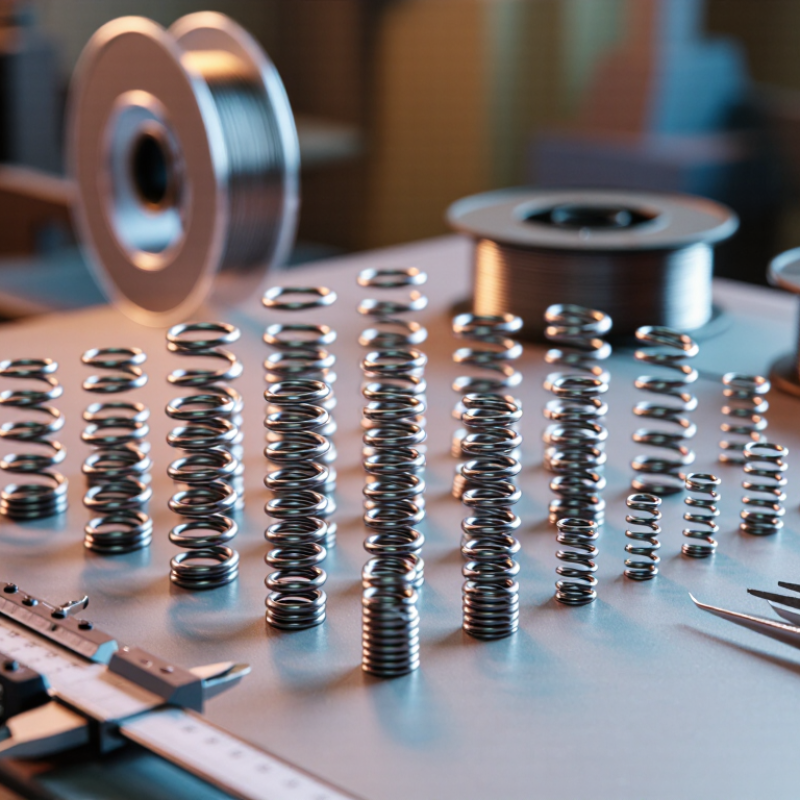
Electronic springs are small metal components that create controlled pressure, electrical contact, or mechanical movement. They appear in battery compartments, switches, sensors, connectors, and compact control devices. Their size is modest. Their function is not.
A well-designed spring maintains contact when a device vibrates, expands, or experiences repeated assembly. It also helps compensate for small dimensional differences between parts. In an Electronic Scale Battery Contact Spring, stable pressure keeps the battery connected during weighing and handling. If pressure is too weak, readings may stop unexpectedly. If it is too strong, the battery case or terminal may deform.
Material selection requires practical testing. Stainless steel can offer useful corrosion resistance. Copper alloys may provide better conductivity. Surface plating can improve contact reliability, but poor adhesion can create problems later. Spring force, working travel, fatigue life, and temperature exposure should be checked together. A bright surface does not prove dependable performance. Visual inspection alone is not enough.
Manufacturers serving global buyers should provide measurable tolerances, test records, and traceable material information. Samples should be tested in the actual assembly, not only on a bench. This detail is often missed. Environmental conditions also matter, especially humidity, dust, and repeated battery replacement. Even a carefully calculated design may need adjustment after real-world testing. That small gap between drawings and use can determine whether a modern device feels reliable.
Electronic springs are miniature mechanical and electrical interfaces. They maintain contact, absorb vibration, and protect sensitive assemblies. The International Federation of Robotics’ World Robotics 2024 report recorded 541,302 industrial robot installations in 2023. That growth increases demand for durable spring contacts in automation equipment.
Compression springs support switches, relays, sensors, and actuator assemblies. Torsion springs control rotary movement in latches and control mechanisms. Wave springs save axial space inside compact housings.
Battery contact springs handle repeated insertion and removal, while constant-force springs maintain stable electrical pressure. EMI shielding springs reduce gaps around doors, covers, and removable panels.
A Spring Door Spring may look similar, but its mechanical duty differs from an electronic contact spring. Material selection remains critical. Stainless steel offers corrosion resistance, while copper alloys usually provide better conductivity.
Some designs still fail.
Tips: Ask for load-deflection curves, contact resistance data, cycle testing, and salt-spray results. Confirm operating temperature before approving samples. The IEC 60068 environmental testing series provides useful guidance for vibration, humidity, and temperature evaluation. Reviewers should inspect plating thickness and burrs under magnification. Tiny burrs can damage mating surfaces. Prototype testing is essential, because laboratory predictions may miss real vibration, dust, or assembly variation.
Evaluating a China-based electronic spring manufacturer requires more than comparing quotations. Request material certificates, dimensional records, and fatigue-test results before approving production. Check wire diameter, coil pitch, spring rate, plating thickness, and contact resistance.
Samples reveal reality. The ISO Survey 2022 recorded over 426,000 ISO 9001 certificates in China. However, certification alone does not prove process control. Confirm the certificate’s scope, issuing body, and renewal status.
Ask for traceability from raw wire to packed components. A capable supplier should explain how it controls tooling wear, heat treatment, and batch variation. This matters when a tiny deviation affects connector pressure or signal stability.
Audit communication and delivery systems as carefully as the factory floor. The World Bank’s Logistics Performance Index 2023 gave China a score of 3.7, ranking it 19th globally. That indicates strong logistics capability, but factory-level execution still needs verification.
Request a pilot batch with an agreed inspection plan. Measure free length, load at working height, surface defects, and corrosion resistance.
For a Toy Spring application, do not assume the same supplier understands electronic contact requirements. Ask whether production records identify operators, machines, and inspection dates. Review corrective-action reports, not only polished presentations. My checklist is useful, but imperfect. Real performance can change after tooling replacement or a sudden material substitution. Independent pre-shipment inspection and an approved sample remain sensible safeguards.
China’s top electronic spring manufacturers increasingly combine cold coiling, precision stamping, and controlled heat treatment. Each process affects force, fatigue life, and dimensional stability. During coiling, programmable equipment controls wire tension and pitch. Operators then inspect free length, coil diameter, and load at specified deflection. Small errors can alter contact pressure inside a compact connector.
Material selection follows the application. Stainless spring wire resists corrosion, while copper alloys support conductivity. ASTM A313/A313M provides requirements for stainless steel spring wire. ISO 9001 remains a useful quality framework. The ISO Survey reports more than one million certified organizations worldwide, showing the scale of documented quality management. However, certification alone proves little. Buyers should request material certificates, calibration records, and traceable inspection data.
Testing should resemble actual service conditions. IEC 60068 methods can guide vibration, temperature cycling, and humidity evaluation. Manufacturers may also perform 100% visual checks, sampling-based dimensional inspection, and force testing with calibrated instruments. A practical control plan records lot number, wire diameter, heat-treatment cycle, and test results. I would not accept “zero defects” as an automatic promise. It sounds impressive, but measurement capability and sampling risks need examination. Clear acceptance limits are more reliable than attractive claims. Surface marks still matter. So does packaging. Vibration during shipment can permanently deform delicate springs.
| Manufacturing or Quality Dimension | Typical Practice for Electronic Springs | Relevant Materials, Equipment, or Standards | Key Quality Evidence for Global Buyers |
|---|---|---|---|
| Application and Design Review | Confirm spring type, load, deflection, working temperature, electrical-contact function, installation space, and expected service life before production. | 2D drawings, 3D CAD models, tolerance stack-up, spring-rate calculations, and design-for-manufacturing review. | Approved drawing, revision control, material specification, critical-to-function dimensions, and documented customer requirements. |
| Common Spring Types | Compression, extension, torsion, contact, battery, grounding, shielding, and miniature formed-wire springs are used in electronic assemblies. | CNC coiling machines, four-slide or multi-slide forming equipment, progressive tooling, and precision forming dies. | Part geometry matches the approved drawing, with clear definition of free length, coil diameter, leg angle, pitch, and contact points. |
| Wire Material Selection | Select wire according to conductivity, tensile strength, fatigue resistance, corrosion resistance, temperature, and magnetic requirements. | Stainless steel, carbon spring steel, copper alloys, phosphor bronze, and nickel-based alloys may be specified according to application needs. | Material certificate, heat or lot traceability, chemical composition record, wire diameter verification, and applicable material standard. |
| Wire Preparation | Straighten, feed, and control wire tension before forming to reduce dimensional variation and surface damage. | Automatic wire feeders, straightening units, servo-controlled feed systems, and calibrated diameter gauges. | Incoming inspection records for wire diameter, surface condition, ovality, and batch identification. |
| Coiling and Forming | Form the wire using controlled pitch, diameter, number of turns, end geometry, and leg position parameters. | CNC spring coilers, programmable tooling, forming dies, and in-process dimensional monitoring. | First-article approval, process parameter records, sample dimensional reports, and statistical process control for critical features. |
| Stress Relief and Heat Treatment | Apply a controlled thermal cycle when required to reduce forming stress and stabilize spring performance. | Batch or continuous ovens with temperature monitoring; the cycle depends on alloy, wire size, and required properties. | Temperature chart, time-at-temperature record, equipment calibration, and post-treatment load or hardness verification. |
| Surface Finishing | Use cleaning, deburring, passivation, plating, or coating when electrical contact, corrosion resistance, or appearance requires it. | Nickel, tin, silver, or other specified finishes may be used; the selected finish must match contact, solderability, and environmental requirements. | Coating specification, thickness measurement, adhesion or appearance inspection, corrosion testing where specified, and restricted-substance documentation. |
| Dimensional Inspection | Inspect free length, outside or inside diameter, wire diameter, pitch, leg position, angle, and end configuration. | Optical measuring systems, vision inspection, profile projectors, micrometers, calipers, gauges, and coordinate measurement equipment. | Inspection report linked to drawing tolerances, calibrated instruments, sampling plan, and nonconformance records. |
| Load and Spring-Rate Testing | Measure force at defined deflection points or torque at defined angular positions according to the product drawing. | Force-displacement testers, torque testers, load cells, digital travel measurement, and automated test fixtures. | Test method, fixture description, calibration status, force or torque results, and acceptance limits stated on the drawing or specification. |
| Electrical Performance | For conductive springs, verify contact resistance, continuity, current-carrying suitability, and stable contact under the intended assembly condition. | Micro-ohm meters, four-wire resistance measurement, continuity testers, and application-specific fixtures. | Defined contact points, test current, measurement method, resistance limits, and test results retained by lot. |
| Reliability and Fatigue Testing | Cycle the spring under representative load, deflection, temperature, vibration, or corrosion conditions when required by the application. | Life-cycle testers, environmental chambers, vibration equipment, and corrosion test equipment selected according to the customer qualification plan. | Pre- and post-test load, dimensional, electrical, and visual results with clearly defined failure criteria. |
| Quality Management System | Control purchasing, production, inspection, corrective action, document revisions, training, and traceability through a formal quality system. | ISO 9001 quality-management principles; sector-specific requirements may be added by the customer or end market. | Quality certificate scope, internal audit records, corrective-action process, process maps, and controlled inspection documentation. |
| Spring Material and Product Standards | Apply the standard named in the purchase specification; standards should not be substituted without written approval. | Examples include ASTM A228 for music wire and ASTM A313 for stainless steel spring wire, where applicable to the specified material and product. | Certificate identifies the exact standard, grade, diameter range, lot, heat number, and test results. |
| Environmental and Chemical Compliance | Review material, plating, packaging, and process chemicals against the destination market and customer compliance requirements. | RoHS and REACH-related declarations may be requested for applicable electronic products; requirements depend on product scope and market. | Supplier declarations, material declarations, plating information, and laboratory reports when contractual testing is required. |
| Packaging and Shipment Protection | Prevent deformation, mixing, corrosion, contamination, and electrostatic damage during storage and international transportation. | Compartmented trays, protective bags, desiccants where needed, batch labels, and packaging designed for the spring geometry. | Packing specification, quantity verification, lot labels, inspection status, and shipping documents matched to the purchase order. |
| Buyer Approval Checklist | Evaluate technical capability, process control, material traceability, inspection capacity, communication, lead time, and change-management practices. | Sample approval, production-part approval process, control plan, process failure analysis, inspection plan, and agreed acceptance criteria. | Signed specifications, approved samples, inspection reports, change notifications, and a defined corrective-action response process. |
China Top Electronic Spring Manufacturers for Global Buyers
Reliable electronic springs begin with the application, not a catalog image. Chinese manufacturers can customize contact springs, battery clips, grounding springs, and miniature compression parts. Common materials include stainless steel, copper alloys, and nickel-plated spring steel. Material choice affects conductivity, fatigue life, corrosion resistance, and cost. According to Grand View Research, the global electronic components market reached about US$466 billion in 2023. This scale increases pressure for stable supply and precise engineering. Buyers should request force curves, dimensional tolerances, plating thickness, and salt-spray results. A shiny surface proves little.
Technical support should continue after sampling. Engineers can review 2D drawings, 3D files, working stroke, coil diameter, and installation space. Finite element analysis can identify stress concentration before tooling begins. Production controls should include incoming material checks, first-article inspection, and force testing. ISO 9001-based systems improve traceability, but certification alone cannot replace process evidence. In my view, this is where many sourcing plans remain weak. The sample passes. The second batch changes.
Tips: Ask for material certificates and test methods. Define contact resistance limits. Confirm RoHS and REACH documentation for your market. Request a small pilot run before volume production. Keep one approved reference sample. Tiny differences matter. According to IPC industry reporting, electronics manufacturers continue to face quality and supply-chain risks, making documented communication essential. A responsive supplier should explain design limits clearly, suggest manufacturable revisions, and report deviations before shipment.
China’s electronic spring manufacturers serve buyers in connectors, switches, sensors, and miniature control assemblies. Export evaluation should begin with product classification, not a supplier’s advertised category. Springs may fall under different HS codes, depending on material, finish, and assembly. UN Comtrade data can help compare trade flows, but classification errors remain common. Ask for commercial invoices, packing lists, material declarations, and tested samples before placing a large order.
Compliance needs evidence. The European Chemicals Agency’s REACH framework restricts substances of concern, while RoHS limits hazardous materials in many electrical products. Request a current RoHS test report, REACH statement, and conflict-minerals declaration where applicable. ISO’s 2022 Survey recorded more than 1.2 million ISO 9001 certificates worldwide, yet certification alone does not prove spring fatigue performance. Check load testing, cycle-life results, plating thickness, and traceability. Touch Spring suppliers should show inspection records linked to batch numbers.
Pricing depends on wire grade, tooling, tolerances, surface treatment, packaging, and order volume. The World Bank Commodity Markets Outlook has repeatedly highlighted metal-price volatility, so fixed quotes need clear validity periods. Compare total landed cost, including freight, duties, inspection, and rejected-part risk. A low unit price can hide expensive tooling changes. A spreadsheet can still lie. I would also review cavity wear, corrective-action speed, and one recent export shipment record. Small production audits often reveal more than polished presentations.
Key supplier-selection considerations for export, compliance, pricing, and production capability
This reference scorecard uses a 100-point evaluation model commonly applied in industrial component sourcing. Compliance documentation, dimensional quality, export capability, pricing transparency, and production flexibility are weighted to support objective supplier comparisons without using company-specific data.
Request material certificates, dimensional records, fatigue results, and plating reports. Keep an approved sample beside the inspection records. Paperwork helps, but samples reveal reality.
No. Certification supports a quality system, but it does not prove fatigue life or stable contact pressure. Check its scope, issuer, and renewal status.
Measure wire diameter, coil pitch, free length, spring rate, and working-height load. Also check surface defects, corrosion resistance, and contact resistance. Tiny changes matter.
Ask the manufacturer to link raw wire, operators, machines, inspections, and packing dates. Batch numbers should appear on production and test records. Traceability can still fail after tooling changes.
Define an inspection plan before production. Measure dimensions, load, surface condition, plating thickness, and electrical resistance. A small batch exposes problems early.
Common choices include stainless steel, copper alloys, and plated spring steel. Conductivity, fatigue life, corrosion resistance, and cost may conflict. The brightest finish proves little.
Request current restricted-substance reports, chemical declarations, material statements, and conflict-minerals documents when applicable. Confirm requirements for the destination market. Do not rely on verbal assurances.
Compare wire grade, tooling, tolerances, surface treatment, packaging, freight, duties, and inspection costs. Check quote validity because metal prices can change. A spreadsheet can still lie.
Engineers should review drawings, files, working stroke, coil diameter, and installation space. They may identify stress points before tooling begins. I would still verify every recommendation.
Keep one approved reference sample and require deviation reports before shipment. Use independent pre-shipment inspection when practical. The sample passes. The next batch may differ.
Electronic Spring components play an important role in modern devices by providing reliable electrical contact, controlled force, vibration resistance, and stable signal transmission. This overview introduces common types used in industrial equipment, including contact springs, grounding springs, battery springs, and precision conductive elements. It also explains how buyers can assess China-based manufacturers through production capability, engineering experience, inspection systems, material traceability, and consistent quality performance.
The article further explores manufacturing methods such as stamping, coiling, heat treatment, plating, and precision forming, along with relevant quality and safety expectations. Global buyers will learn how customization, material selection, technical communication, prototyping, and testing support affect product suitability. Export documentation, regulatory compliance, lead times, pricing transparency, packaging, and after-sales service are also considered, helping purchasers compare suppliers objectively and select a dependable Electronic Spring partner for long-term industrial applications.