Leave Your Message
0%

China’s stainless steel spring industry is pretty massive and highly competitive — it’s not exactly straightforward to judge just from a catalog. According to the 2024 report by the International Stainless Steel Forum, global stainless steel production hit around 58.4 million tons in 2023, with China making up about 36.7 million of that. That’s a huge scale, supporting a wide range of capabilities like wire manufacturing, forming, heat treatment, and precision springs.

In this article, I want to take a closer look at some of the top Chinese suppliers of stainless steel springs. I’ll be talking about companies like Zhejiang Meili High Technology Co., Ltd., Jiangsu Shenwang Group, and a few others that have proven their production capacity. When evaluating suppliers, you want to look at things like wire grade, how consistent the load can be, their fatigue performance, surface finish, dimensional accuracy, and whether they can trace batches properly. Standards such as ASTM A313/A313M and ISO 6931-1 are helpful technical references, but they’re not the whole story. Just having a shiny website or some certifications doesn’t necessarily mean a factory is disciplined or reliable.

As A. M. Wahl, a well-known expert in spring design, once said, “The spring is one of the most versatile mechanical elements.” And honestly, that still holds true. Springs might seem simple at first glance, but tiny tweaks — like changing coil diameter or the tempering process — can make a big difference in how long they last. Always be careful to distinguish between stainless steel spring steel and generic stainless wire, since people often use those terms interchangeably, which can lead to a lot of confusion.

Keep in mind, no supplier ranking is set in stone. Factors like export records, testing capabilities, and the industries they serve can all change over time. Also, some publicly available data is incomplete, so this isn’t meant to replace a full audit or sample approval. Instead, it’s just a practical starting point. The biggest supplier isn’t always the best — what really matters is who can consistently deliver stable quality, provide clear documentation, and communicate honestly about their technical capabilities.
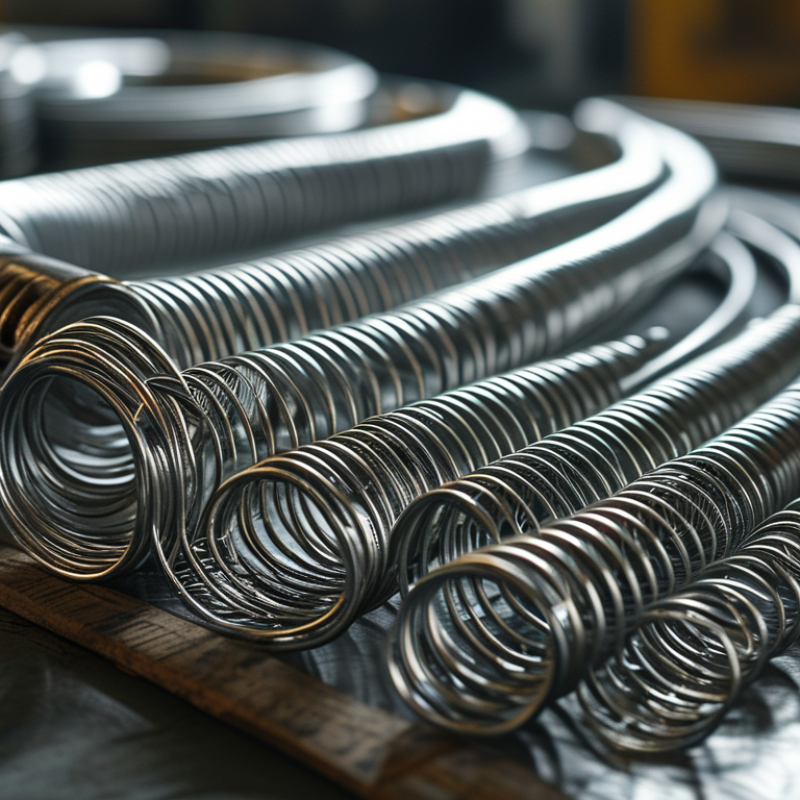
Who Are China Top Stainless Steel Spring Suppliers?

What Are Stainless Steel Springs and Why Are They Used?

What Are Stainless Steel Springs and Why Are They Used?

A Stainless Steel Spring is an elastic component that stores and releases mechanical energy. Its coiled wire returns toward its original shape after compression, extension, or twisting. Stainless steel is chosen for its corrosion resistance, strength, and stable performance across changing environments. It can tolerate moisture, cleaning chemicals, and moderate temperature variation better than ordinary carbon steel.

These springs appear in valves, medical instruments, electrical contacts, automotive assemblies, and industrial equipment. A small compression spring may keep a switch firmly closed. A larger torsion spring can control a hinged cover or return a lever to position. Engineers select wire diameter, coil diameter, free length, and active coils according to the required load. Surface finish also matters when the spring faces salt spray or frequent handling.

Reliable suppliers normally verify material certificates, dimensions, spring rate, and fatigue performance. Practical inspection should include measuring free length and checking for uneven coils. Testing samples under repeated cycles can reveal weaknesses that visual checks miss. No material choice is perfect. Stainless steel may lose strength at high temperatures, and excessive stress can cause permanent deformation. In real applications, calculations sometimes overlook vibration, friction, or installation errors. I have found that a slightly conservative design often performs better than an exact laboratory estimate. The correct spring must match its working environment, not only its drawing.

Which Types of Stainless Steel Springs Are Made in China?

China produces a broad range of stainless steel springs for industrial and commercial applications. Compression springs are widely used in valves, pumps, switches, and machinery. They resist pressing forces and return to their original length. Extension springs include hooks at both ends. They support doors, levers, and tension-controlled equipment. Torsion springs store energy through rotation. Hinges, clamps, and small mechanical assemblies commonly use them.

Manufacturers also make conical springs, wave springs, disc springs, and custom wire forms. Conical designs can fit into compact spaces while reducing coil interference. Wave springs provide axial force where installation height is limited. Disc springs handle higher loads in a smaller package. Wire forms may look simple, but their bends require careful tooling and dimensional control. Stainless grades such as 301, 304, 316, and precipitation-hardening alloys serve different environments.

In practical sourcing, material selection should match corrosion exposure, temperature, and fatigue requirements. A spring for coastal equipment may need stronger corrosion resistance than one used indoors. Coil diameter, wire size, working height, and cycle life must be checked together. Passivation can improve surface cleanliness, but it cannot repair poor forming or incorrect heat treatment. Load testing, free-height inspection, and sample fatigue checks improve reliability. Drawings sometimes omit installation friction. That omission can cause trouble. Even experienced buyers should review real assembly conditions before approving production.

What Makes a Stainless Steel Spring Supplier Highly Competitive?

A competitive stainless steel spring supplier proves capability through repeatable production, not polished promises. In practical sourcing, buyers should inspect material certificates, wire grades, and heat-treatment records. Traceability matters when a small batch behaves differently. A supplier should explain tensile strength, corrosion resistance, and operating temperature clearly. They should also know when a design is unrealistic. That honesty saves time.

For a Stainless Steel Contact Spring, contact force must remain stable after repeated compression and vibration. Strong suppliers use controlled coiling, accurate tooling, and documented inspection points. They measure free length, outer diameter, load, and spring rate against agreed drawings. Samples should face fatigue testing, salt-spray exposure, and dimensional checks when the application demands them. Not every project needs every test. Over-testing can waste budget. Under-testing can create expensive failures.

Responsiveness is another competitive advantage. Engineers should receive useful feedback before production starts. A capable team may suggest a different wire diameter, end style, or tolerance. This can improve assembly without weakening performance. Capacity also matters, but large equipment alone proves little. Ask about maintenance, operator training, and batch consistency. We have seen promising samples fail during scale-up. That lesson remains uncomfortable. Supplier evaluations should include pilot runs, inspection reports, and honest communication about limits. Reliable partnerships grow from evidence, not confident language.

Who Are China’s Leading Stainless Steel Spring Suppliers?

China’s leading stainless steel spring suppliers are not defined by export volume alone. They combine controlled forming, stable materials, and dependable inspection records. The International Stainless Steel Forum reported approximately 36.7 million tonnes of Chinese stainless steel production in 2023. That represented nearly 63% of global output. This industrial depth supports broad access to 304 and 316 stainless steel. Still, steel availability does not guarantee spring consistency.

A serious supplier should provide mill certificates, batch traceability, and measurable load testing. Ask for force-deflection curves, fatigue results, and dimensional inspection records. For a Stainless Steel Battery Contact Spring, plating control and contact resistance deserve special attention. Small details matter. Supplier audits should also review wire storage, tooling maintenance, and calibration intervals. ISO 9001 certification can support process discipline, but it cannot replace product-level evidence.

Industry evaluations often focus too heavily on quotations. That is a mistake. A lower unit price may hide unstable free length, burrs, or early fatigue failure. The OECD’s recent steel outlook also highlights continuing pressure from overcapacity and weaker demand. Buyers should therefore compare capacity, not just prices. Samples should be tested under real assembly conditions, including compression cycles and temperature changes. No shortlist is perfect. Rechecking assumptions remains necessary.

What Quality Standards and Certifications Should Buyers Check?

When evaluating China’s stainless steel spring suppliers, buyers should inspect certifications beyond a framed ISO certificate. The ISO Survey 2022 recorded 1,265,216 ISO 9001 certificates worldwide, showing its broad adoption. However, ISO 9001 confirms a management system, not automatic spring performance. Check the certificate’s scope, issuing body, expiry date, and manufacturing address. The scope should cover wire forming, heat treatment, testing, or related processes.

Material compliance needs equal attention. Spring wire should match recognized standards, such as ASTM A313/A313M, EN 10270-3, or JIS G4314. Ask for heat numbers, chemical composition, tensile strength, hardness, and dimensional inspection records. A compliant material certificate, preferably EN 10204 3.1, should connect each batch to the finished springs. For automotive applications, IATF 16949 may indicate stronger process controls. An accredited ISO/IEC 17025 laboratory should perform fatigue, load, corrosion, and salt-spray tests when required.

Look closely at traceability.

A practical audit should compare test reports with production samples, not only scanned documents. Verify gauge calibration, sampling plans, nonconformance records, and corrective actions. REACH and RoHS declarations can support restricted-substance compliance, but they do not replace mechanical testing. I still treat paperwork as a starting point, not a verdict. Suppliers may hold valid certificates while controlling critical spring loads inconsistently. Buyers should therefore request recent batch data, witness testing, and a small pilot order before approving regular production.

How Do Chinese Suppliers Support Custom Spring Manufacturing?

Chinese stainless steel spring suppliers support custom manufacturing through practical engineering and controlled production. Many work from drawings, samples, or simple performance requirements. They can review wire diameter, coil diameter, free length, working load, and operating temperature before production begins. This early review often reveals problems that are easy to miss on a basic sketch.

Technical teams commonly use CNC coiling equipment for repeatable spring shapes. They may also provide bending, cutting, heat treatment, surface cleaning, and passivation. For demanding applications, suppliers can measure force at specified heights, check dimensions with gauges, and record material certificates. Stainless steel grades should match the environment, especially where moisture, salt, or repeated movement is present. Clear inspection standards make communication more reliable.

Custom projects are rarely perfect on the first attempt. A trial spring may meet its length target but feel too stiff during installation. Engineers can adjust the coil count, pitch, wire size, or forming process after testing. Sample approval, production photographs, and batch traceability help customers follow each stage. Some suppliers respond quickly, but their technical explanations may still be incomplete. Asking for tolerance data and test records exposes that weakness before large-volume production.

How Can Buyers Choose the Right Stainless Steel Spring Supplier?

Choosing the right stainless steel spring supplier requires more than comparing unit prices. Start with the application. Check working load, compression height, cycle life, operating temperature, and corrosion exposure. A reliable supplier should explain how each specification affects spring performance.

Ask for material certificates, dimensional inspection records, and load-deflection data. For a 304 Stainless Steel Battery Contact Spring, request samples made with the proposed wire diameter and surface finish. Test the spring inside your actual battery compartment. Measure contact force after repeated compression, not only on the first cycle.

Production experience matters. Review the supplier’s tooling control, batch traceability, and packaging methods. Small scratches can become failure points in humid environments. Ask how they control coil diameter, free length, and burrs during production. A clear corrective-action process also shows technical maturity.

Do not trust a perfect sample alone. I have seen attractive samples hide unstable tooling or inconsistent heat treatment. A factory visit, video inspection, or independent test can reveal more. It is reasonable to begin with a small trial order. The cheapest supplier may create higher costs through rework, delayed assembly, or field failures. Check communication, too. Slow answers before purchase rarely improve after payment. An honest supplier will admit limits and suggest a safer design when your requirements are unrealistic.

Who Are China’s Top Stainless Steel Spring Suppliers? How Can Buyers Choose the Right Supplier?

Before comparing suppliers, buyers should confirm the exact stainless spring-wire grade and its chemical composition. The chart below shows standard composition ranges for commonly specified stainless spring materials, expressed as weight percentages.

Ask each supplier for material certificates, heat-lot traceability, dimensional inspection records, and compliance with the specified ASTM grade. Composition ranges are based on commonly referenced ASTM stainless spring-wire specifications; the supplier should verify the exact grade and applicable standard for each order.

FAQS

What makes a stainless steel spring supplier competitive?

A competitive supplier shows repeatable production, not polished promises. Material certificates and inspection records should be available. Evidence matters more.

Which documents should buyers request?

Request material certificates, wire grades, heat-treatment records, and dimensional inspection reports. Load-deflection data can reveal unstable performance. Missing records are concerning.

How should spring performance be tested?

Test free length, outer diameter, contact force, and spring rate against approved drawings. Use fatigue, corrosion, or temperature tests when the application requires them.

Are all possible tests necessary?

No. Testing should match the working environment, cycle life, and corrosion exposure. Over-testing wastes budget. Under-testing creates expensive failures.

What should buyers check during sample evaluation?

Compress samples repeatedly and measure force afterward. Inspect scratches, burrs, coil diameter, and free length. A first-cycle result is not enough.

Why does traceability matter?

Traceability connects each batch with its material, tooling, operators, and inspection results. It helps explain why one small batch behaves differently.

How can buyers judge production capability?

Ask about tooling maintenance, operator training, batch consistency, and pilot-run controls. Large equipment proves little by itself. Scale-up can expose hidden problems.

Should buyers choose the lowest unit price?

Not always. Low prices may lead to rework, delayed assembly, or field failures. A small trial order can reduce risk before larger production.

What communication qualities should a reliable supplier have?

Engineers should provide useful feedback before production begins. They may recommend a different wire diameter, end style, or tolerance. Honesty is valuable.

Can a perfect sample guarantee reliable production?

No. A perfect sample can still hide unstable tooling or inconsistent heat treatment. Independent testing or a factory review may reveal more. I still underestimate this risk sometimes.

Conclusion

China has become a major source of stainless steel springs for industries that require strength, corrosion resistance, and reliable performance. A Stainless Steel Spring can be manufactured in different forms, including compression, tension, torsion, and custom-shaped designs, making it suitable for automotive, medical, electronics, machinery, and marine applications. Leading suppliers typically compete through advanced production equipment, precise engineering, consistent material quality, flexible order quantities, and competitive pricing.

When selecting a supplier, buyers should examine material traceability, dimensional accuracy, fatigue performance, surface treatment, and quality-control procedures. Recognized quality management systems and relevant industry certifications can provide additional confidence. Chinese manufacturers also support customization by offering design consultation, prototype development, spring-force calculations, tooling, sample testing, and mass production. The best supplier should be evaluated according to technical capability, communication efficiency, production capacity, delivery reliability, inspection methods, and after-sales support. A careful comparison of these factors helps buyers find a dependable partner for both standard and highly specialized spring requirements.

Matthew

Matthew

Matthew is a highly skilled marketing professional with a deep understanding of the technological landscape surrounding battery connectors, springs, and high-precision stamping products. With his extensive experience in research and development, he excels in articulating the intricate value of the......
Previous What Is Copper Plate and What Is It Used For?