Hey, have you checked out Copper Plate? It's basically a flat, rolled sheet mainly made of copper. Its distinctive reddish color, excellent conductivity, and reliable heat transfer make it super useful in lots of different industries. For example, electrical folks often use it for busbars, grounding parts, connectors, and even transformer components. Since copper conducts electricity so well, it helps cut down energy losses when everything's designed right. Plus, it transfers heat pretty quickly, so you’ll find it in heat exchangers, radiators, and cooling systems. And the best part? It’s pretty easy to work with—you can cut, shape, and join it easily, especially if you pick the right grade and thickness.
In the construction world, Copper Plate comes in handy for roofing details, flashing, decorative panels, or just adding some architectural flair. Over time, if it's exposed to the elements, it naturally develops that lovely green patina. But here’s the thing — that’s not just for looks. That green layer actually helps protect the metal underneath. Craft and printing folks also love thin copper sheets for engraving and detailed plate work—it's a really practical choice for those jobs.
That said, copper isn’t perfect for everything. It tends to be heavier and pricier than aluminum or coated steel. Plus, in some environments, if it touches incompatible metals, it can speed up corrosion. So, engineers really need to double-check things like conductivity, tensile strength, thickness, surface finish, and how it’ll be used temperature-wise before placing an order. Fortunately, product certifications and testing from suppliers can give you a good idea about quality. But even the most experienced buyers sometimes overlook small details—like damaged edges or unsuitable joinery methods—that’s when a second look pays off. At the end of the day, choosing the right Copper Plate means balancing performance, longevity, safety, and overall costs for your project.
Copper Plate Defined: Composition, Density of 8.96 g/cm³, and Key Forms
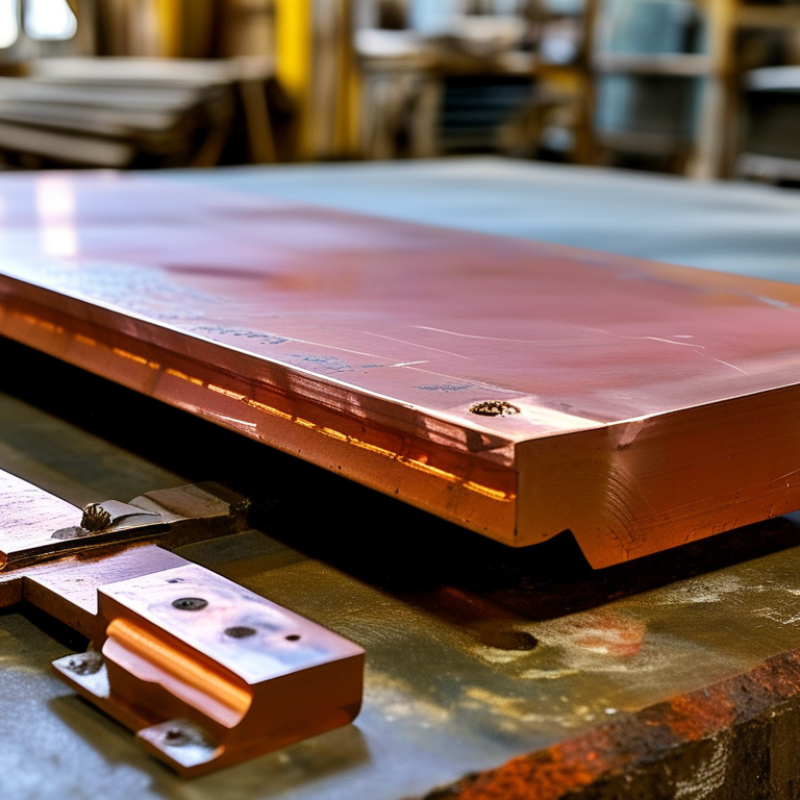
Copper plate is a flat, durable product made mainly from copper. Pure copper has a density of about 8.96 g/cm³ at room temperature. The exact value can shift slightly with temperature, processing, and alloy content. That detail matters. A plate’s weight depends on its length, width, and thickness, not thickness alone. Copper’s reddish surface, high electrical conductivity, and strong thermal conductivity make it useful in demanding applications.
Common forms include pure copper plate, alloy plate, rolled sheet, thick strip, and precision-cut panels. Some plates have smooth surfaces, while others are perforated, machined, or coated for a specific environment. In workshops, copper plates support busbars, grounding components, heat exchangers, and architectural details. A Copper Heat Dissipation Plate can move heat away from electronic parts, helping reduce local hot spots. However, copper can soften during heating and may scratch during handling. Design assumptions need checking.
Tips: Confirm the alloy, thickness tolerance, surface condition, and required conductivity before purchasing. Weighing a sample can reveal whether the stated dimensions are realistic. Use gloves to avoid fingerprints and surface contamination. For thermal work, check contact flatness and mounting pressure. A shiny plate is not automatically a better plate. Temperature, airflow, and installation quality often control real performance.
How Copper Plate Is Made: Casting, Rolling, Annealing, and Surface Finishing
What Is Copper Plate and What Is It Used For?
Copper plate begins as molten copper poured into a slab mold. Continuous casting controls thickness and reduces internal defects. According to the USGS Mineral Commodity Summaries 2025, global mine production reached about 22 million metric tons in 2024. That scale explains copper’s industrial importance. After casting, hot rolling compresses the slab between large rolls. The metal becomes thinner, longer, and more uniform. Cold rolling can follow when tighter thickness and smoother surfaces are required. Copper work-hardens during rolling. It also loses some ductility.
Annealing restores formability by heating the plate in a controlled furnace. Temperature, time, and atmosphere matter. Poor control can create oxidation, grain growth, or uneven hardness. Surface finishing may include pickling, brushing, grinding, or polishing. These steps remove scale and improve appearance. They also prepare the plate for fabrication, electrical parts, heat exchangers, roofing, and architectural details. The International Copper Study Group projected refined copper usage near 26 million metric tons in 2024, showing why consistent processing remains important. Still, no production recipe works perfectly for every copper grade.
Tips: Check thickness at several points, not only the center. Inspect edges for cracks after rolling. A bright surface is not proof of good internal quality. Review hardness and grain structure after annealing. I have found that small furnace variations can change bending behavior more than expected. Suppliers should provide chemistry, mechanical properties, and surface-condition records.
Copper Plate Grades: C10100 Conductivity Above 100% IACS and C11000
Copper plate is a flat, workable form of copper used in electrical, thermal, and fabrication applications. C10100 and C11000 are common grades, but their performance differs slightly. C10100, known as oxygen-free electronic copper, can achieve conductivity above 100% IACS at 20°C. C11000, or electrolytic tough-pitch copper, typically reaches 100% IACS. These values follow International Annealed Copper Standard testing and align with technical data from the Copper Development Association and ASTM B170.
C10100 suits high-frequency conductors, vacuum components, and precision electrical contacts. Its very low oxygen content reduces risks during controlled heating.
C11000 is more widely selected for busbars, plates, tubing, and general electrical fabrication. It offers excellent conductivity with easier availability and practical forming performance.
A Copper Heat Sink made from either grade can move heat rapidly, though thickness, airflow, surface area, and mounting pressure matter greatly. Conductivity alone does not guarantee cooling. That assumption needs testing.
Tips: Check the mill certificate before cutting. Confirm conductivity, oxygen content, thickness, and temper. For demanding thermal work, test the finished assembly, not only the raw plate. A few uneven contact marks can increase thermal resistance. ASTM B152 can help verify plate requirements, but real installation conditions may still expose gaps in the design.
Copper Plate Dimensions: ASTM B152 Thickness Standards and Tolerance Factors
Copper plate is a flat, rolled copper product valued for electrical conductivity, corrosion resistance, and easy fabrication. It supports busbars, grounding components, roofing details, heat exchangers, and industrial enclosures. A Copper Tube Heat Sink may also use copper plate sections to transfer heat from tubes into surrounding air.
ASTM B152/B152M provides requirements for copper sheet, strip, plate, and rolled bar. It covers material chemistry, mechanical properties, dimensions, and permitted variations. Thickness should be stated in millimeters or inches, with the required temper and copper grade. Common temper conditions include annealed, half-hard, and hard, but availability can vary by specification and supplier.
Thickness tolerance is not a single universal number. It can change with nominal thickness, product width, temper, edge condition, and measurement method. A 3 mm plate, for example, may require a different permitted variation than a thinner strip. The ordered width and length also influence dimensional limits, while flatness and camber may need separate control. Always check the current ASTM table instead of copying an old tolerance chart.
From practical inspection work, the micrometer should be calibrated and used at several locations, not only near the center. Oxidation, burrs, temperature, and surface marks can distort readings. A technical drawing may appear complete, yet one missing tolerance can create costly rework. Requesting a certified test report adds useful evidence, although paperwork alone does not replace physical inspection.
Electrical Applications: Busbars, Grounding Systems, and 100% IACS Conductivity
Copper plate is a flat, workable sheet made from copper or a copper alloy. Its value comes from high electrical conductivity, thermal performance, and easy fabrication. For electrical work, engineers often specify copper near 100% IACS conductivity. This rating compares conductivity with internationally accepted annealed copper. It is a reference, not a guarantee for every plate.
Busbars are a common application. A copper plate can carry substantial current through a compact, rigid path. Its broad surface also helps release heat inside switchboards and power distribution equipment. Proper thickness matters. So do joint design, surface preparation, and tightening force. A poorly prepared connection can create hot spots, even with excellent copper.
Copper plate also supports grounding systems. It provides a low-impedance path for fault current when connected correctly to grounding conductors and equipment. In practice, installers must consider corrosion, mechanical protection, and local electrical requirements. Soil moisture and dissimilar metals can change long-term performance. Real installations are less tidy. That assumption needs checking.
In battery assemblies, a Battery Clamp Plate may help hold or connect components, depending on the design. It should not be treated as a universal substitute for a busbar. Current capacity depends on plate area, temperature, contact pressure, and ventilation. I have seen small contact errors create visible discoloration near terminals. Inspection should include torque verification, clean contact surfaces, and thermal checks under realistic load.
Copper Plate: Electrical Conductivity Compared with Common Metals
Electrical conductivity is shown as a percentage of the International Annealed Copper Standard (IACS), where annealed copper is defined as 100% IACS. Copper plate is widely used for busbars, grounding systems, bonding plates, and electrical connectors because its high conductivity helps carry current efficiently while limiting voltage drop and resistive heating. Aluminum is lighter but less conductive, while brass, steel, and stainless steel generally require greater cross-sectional area for comparable electrical performance.
Industrial Uses: Heat Exchangers, Marine Equipment, Roofing, and Fabrication
What Is Copper Plate and What Is It Used For?
Industrial Uses: Heat Exchangers, Marine Equipment, Roofing, and Fabrication
Copper plate is a thick, flat product made from refined copper or copper alloys. Its high thermal conductivity supports heat exchangers, especially where compact heat transfer matters. The International Energy Agency’s Global Critical Minerals Outlook 2024 places global copper demand near 26 million tonnes in 2023. Demand is expected to rise as electrification expands. Copper plate also resists atmospheric corrosion, but it is not immune to every environment.
In marine equipment, copper-nickel plate can serve seawater piping, condenser parts, and protective structures. Alloy selection remains critical because stagnant seawater may cause localized corrosion. For roofing, copper plate forms durable seams, valleys, flashing, and decorative surfaces. Its natural patina develops from bright orange to brown and green. A practical limitation is thermal movement. Poorly designed fasteners can create noise, buckling, or leaks. Fabricators use copper plate for busbars, tanks, brackets, and custom panels. It cuts and bends well, yet work hardening can complicate repeated forming. The USGS Mineral Commodity Summaries 2024 reported roughly 22 million tonnes of worldwide mined copper production in 2023, showing the scale behind these applications.
Tips: Check thickness, temper, alloy, and surface condition before ordering. Keep copper away from incompatible metals when moisture is present. Use isolation washers and suitable joint designs. Do not assume thicker always means better. In real projects, installation details often decide service life more than material cost.
Selecting Copper Plate: Strength, Corrosion Resistance, Thickness, and Cost Criteria
Copper plate combines high electrical conductivity with useful thermal performance. The Copper Development Association identifies commercially pure copper as approximately 100% IACS conductivity in the annealed condition. That figure matters for busbars, heat exchangers, grounding parts, and electrical connectors. It is not universal. Alloy, temper, surface condition, and temperature can change performance.
Strength requires closer attention. Pure copper is relatively soft, while cold-worked grades offer greater hardness and tensile strength. ASTM B152/B152M provides recognized requirements for copper sheet, strip, plate, and circles, including chemical composition and mechanical properties. Check the specified temper, not only the alloy name. A thick plate may still deform around drilled holes. It can also become difficult to form.
Corrosion resistance is a major selection advantage. Copper develops a protective surface layer in ordinary air, but chlorides, ammonia, acidic moisture, and crevices can accelerate attack. The National Association of Corrosion Engineers reports that environment, exposure time, and material condition strongly influence corrosion rates. Do not assume “copper” means maintenance-free. Thickness should reflect load, heat flow, machining allowance, and expected wear. Cost also follows more than weight. The U.S. Geological Survey’s Mineral Commodity Summaries tracks copper prices and supply changes, which can shift purchasing costs quickly. A thin plate may look economical. Later replacement can prove otherwise. Include cutting, finishing, transport, and scrap value when comparing quotations. For critical parts, a supplier’s mill certificate and independent dimensional inspection are worth the extra effort.
FAQS
: Copper plate supports electrical, thermal, grounding, and fabrication work. It is flat and easy to shape. Thickness still matters.
One oxygen-free grade can exceed 100% IACS conductivity at 20°C. Another commonly reaches about 100% IACS. The difference may be small in ordinary equipment.
A widely available, easily formed grade often suits busbars. Choose thickness according to current, temperature, and available space. Good copper cannot fix poor joints.
Copper transfers heat quickly through a plate. Cooling also depends on thickness, airflow, surface area, and mounting pressure. Conductivity alone is not enough.
Dirt, uneven surfaces, or incorrect tightening can increase contact resistance. A small contact error may cause visible discoloration near a terminal. Inspect it under realistic load.
Yes, when connected correctly to grounding conductors and equipment. Designers should consider corrosion, mechanical protection, and local requirements. Moisture changes the situation.
No. A clamp plate may hold or connect components, depending on the design. Current capacity depends on plate area, temperature, contact pressure, and ventilation. It is not universal.
Review the material certificate before cutting. Confirm conductivity, oxygen content, thickness, and temper. Then inspect the finished assembly.
Check contact cleanliness, tightening force, temperature rise, and visible marks. Test the complete assembly, not only the raw plate. The design may still need revision.
Conclusion
Copper Plate is a flat copper product valued for its excellent electrical and thermal conductivity, corrosion resistance, and workability. With a typical density of 8.96 g/cm³, it is available in various forms, thicknesses, and surface conditions. Its production generally involves casting, hot or cold rolling, annealing, and surface finishing to achieve the required dimensions, strength, and appearance. Common grades include C10100, known for conductivity exceeding 100% IACS, and C11000, which offers a practical balance of conductivity, formability, and availability.
Copper Plate dimensions are commonly specified according to ASTM B152, with thickness tolerances influenced by manufacturing methods and required precision. It is widely used for electrical busbars, grounding systems, heat exchangers, marine equipment, roofing, and general fabrication. When selecting a suitable plate, users should consider conductivity, mechanical strength, corrosion resistance, thickness, dimensional tolerance, processing needs, and total cost to ensure reliable performance in the intended application.