


How to choose toy battery shrapnel? Key points of shrapnel for plush toys and electric toys
Bullets are the most inconspicuous yet essential component in a toy battery compartment. Contact with virtual objects, spring detachment, and rust coating - any of these can cause the toy to intermittently malfunction. Based on over 20 years of experience in manufacturing battery shrapnel, Good Craftsman has summarized the key selection points as follows for procurement and design reference.
1. First determine the battery model, the shrapnel is not universal
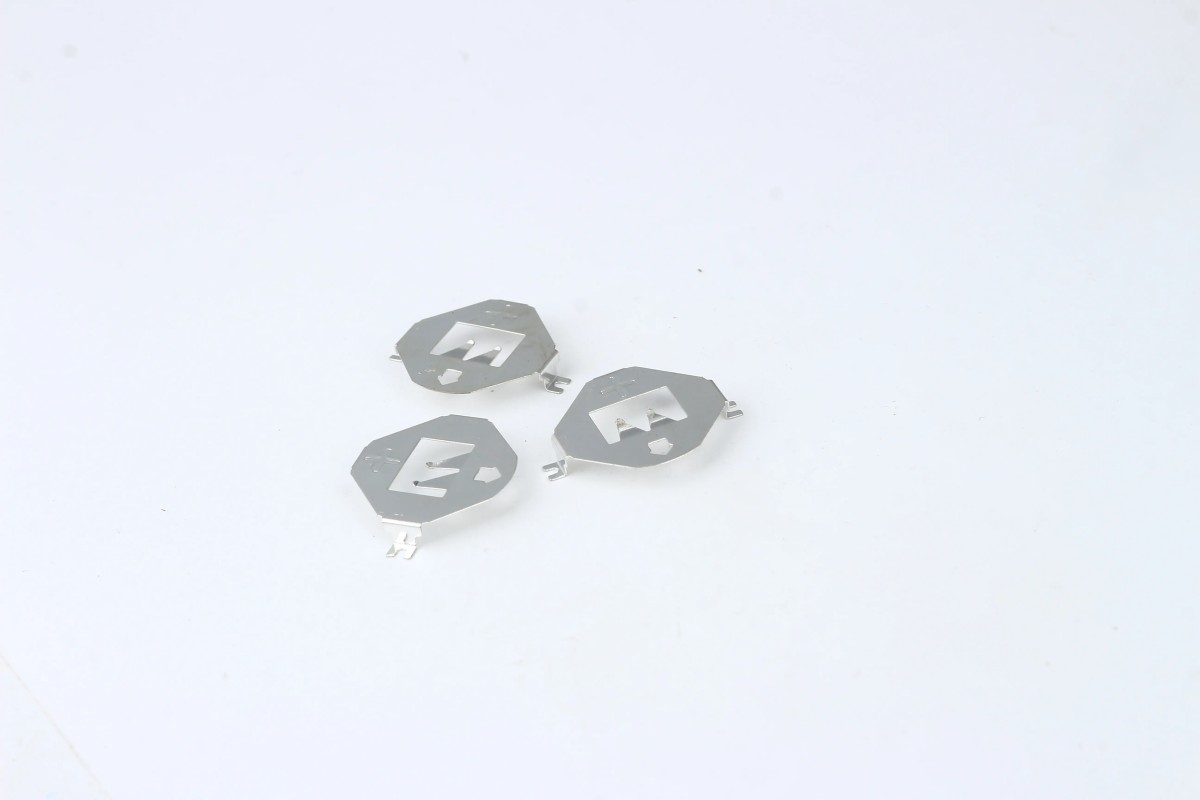
Button batteries (CR series), sizes 5/7 (R6/R03), sizes 1/2 (LR20/R14), and 18650 cylindrical lithium batteries have completely different bullet structures. The first step in selection is always to lock in the battery model.
2. Plush toys: Safety and appearance priority
Plush toys have compact space and can be directly grasped by children. Suggestions:
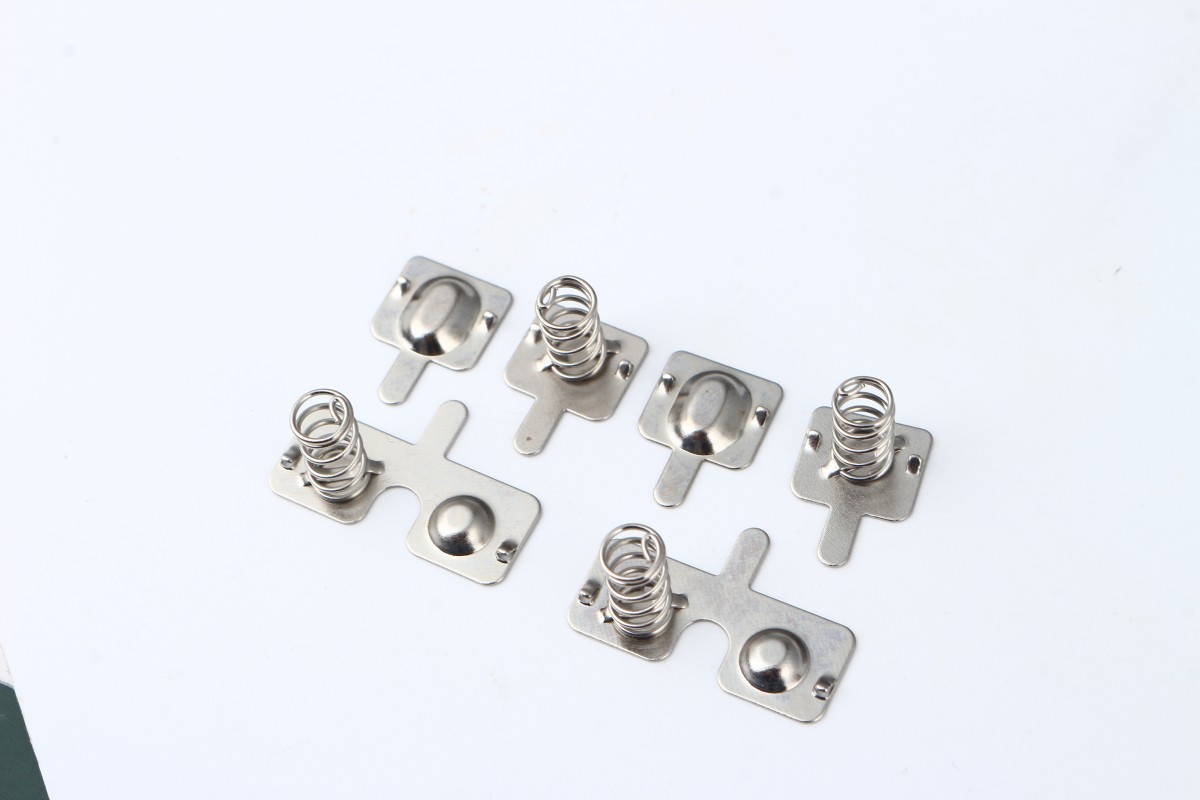
Choose button spring/springless spring/appearance stamped spring, balance conductivity and appearance, and avoid burrs that may hurt your hands;
Material priority: Nickel plated phosphor copper or stainless steel: phosphor copper has good elasticity and conductivity, while nickel plated stainless steel is rust proof and safe to contact;
The plating is treated with nickel plating to cope with long-term contact with sweat and moisture, delay oxidation, and stabilize contact resistance.
3. Electric Toys: Current and Durability Priority
Electric toys commonly use size 5/7 or 18650, which require high current and repeated disassembly and assembly of the battery. More emphasis is placed on the "bite force" and consistency of the shrapnel:
Bridge riveting battery spring: Good craftsman. The riveting tension of this process reaches 16 pounds, and the spring is not easy to fall off. The molding inside the mold ensures that each piece has the same size and is suitable for batch shipment;
Suitable for LR20/R14/R6/R03 zinc manganese dry batteries and ICR18650 cylindrical lithium batteries with positive and negative electrodes;
Under vibration and repeated disassembly scenarios, bridge riveting is more stable and of consistent quality than spot welding.
4. Material and Coating Comparison
| Dimension | Common Selection | Application Scenarios |
|---|---|---|
| Phosphor Bronze | Good elasticity, excellent electrical conductivity | Most shrapnels, springs |
| Nickel‑Plated Stainless Steel | Rust‑proof, safe | Child‑contacted parts, humid environments |
| Cold‑rolled Steel Sheet | Low cost | General cost‑sensitive components |
| Nickel‑plated / Gold‑plated | Rust‑proof / High electrical conductivity | Nickel‑plated for general use; gold‑plated for high‑requirement applications |
The substrate thickness is 0.2-0.5mm, the wire diameter is 0.3-1.0mm, and the tolerance is controllable at 0.01-0.5mm. The toy space is small, and if the tolerance is out of control, it cannot be installed or the contact is virtual. It is recommended to provide a battery compartment size diagram.
5. Why is craftsmanship more crucial than unit price
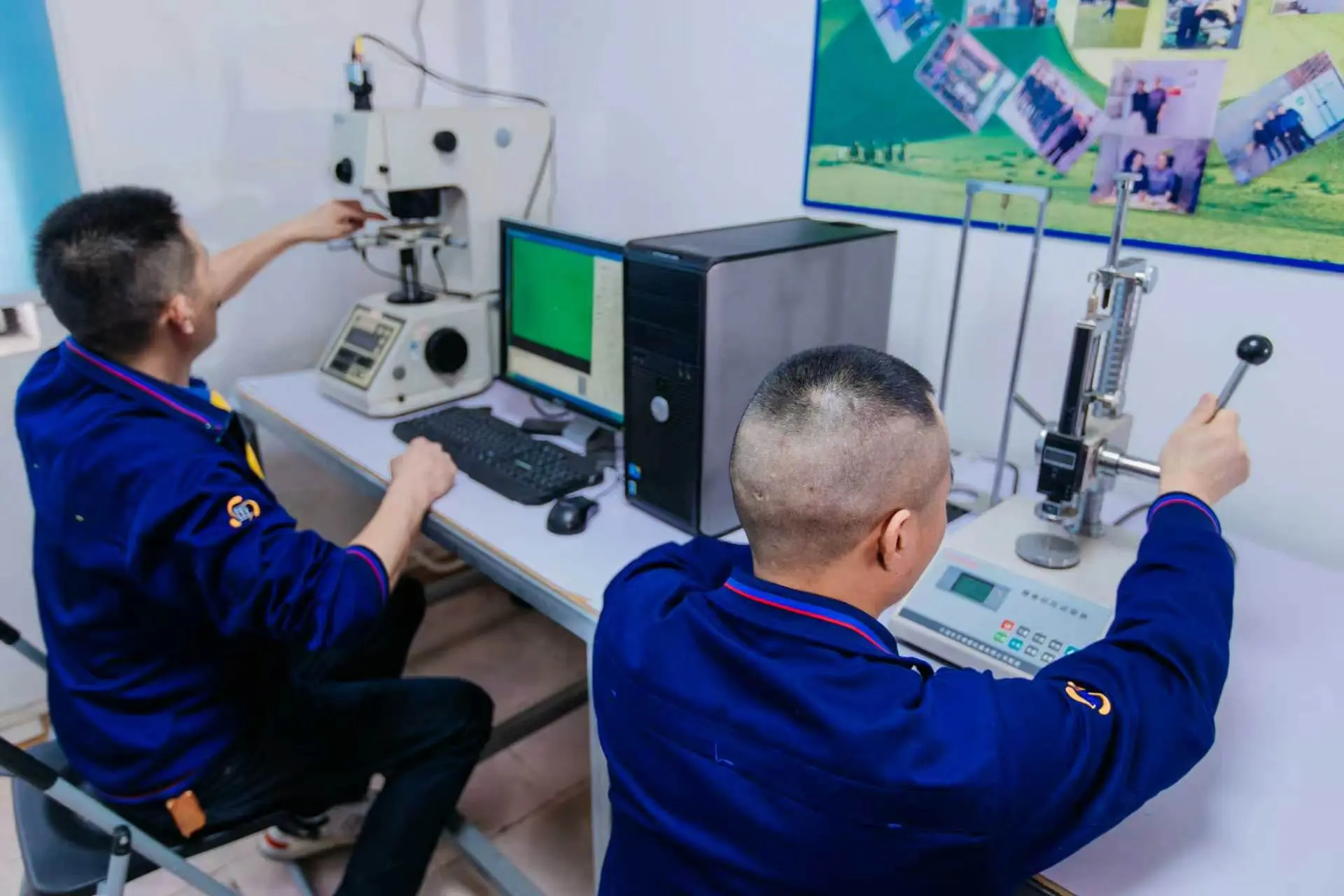
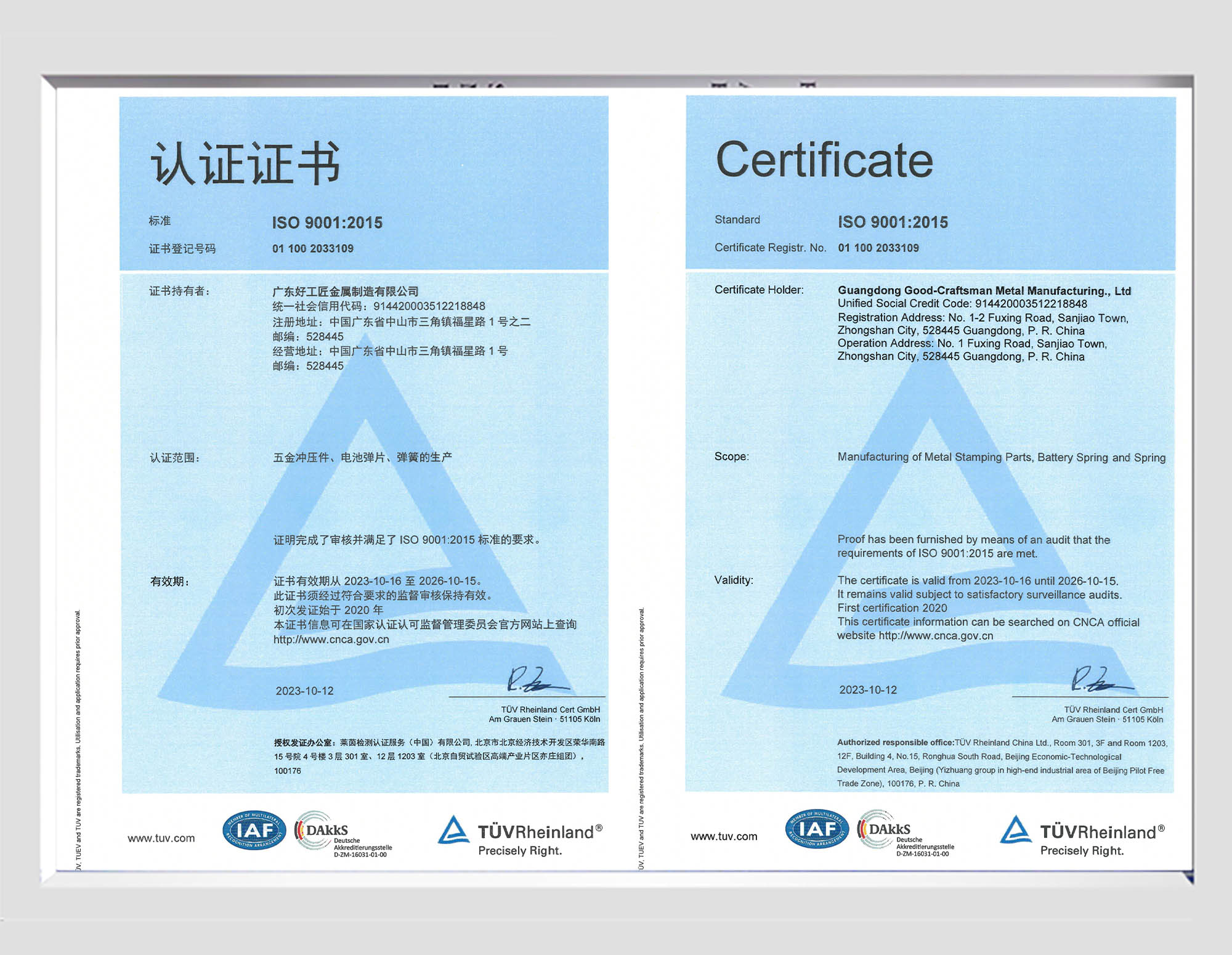
Toy shrapnel is most afraid of "hidden defects" - uneven electroplating, virtual welding during riveting, and poor contact after testing at the factory and using for a while. Good Craftsman is a national high-tech enterprise and a T Ü V Rheinland ISO9001 certified enterprise. As a joint drafting unit, it participated in the development of the group standard for "General Specification for Battery Bullets" (T/ZSCQO 010-2025) (ranked first).
6. Sample making and minimum order
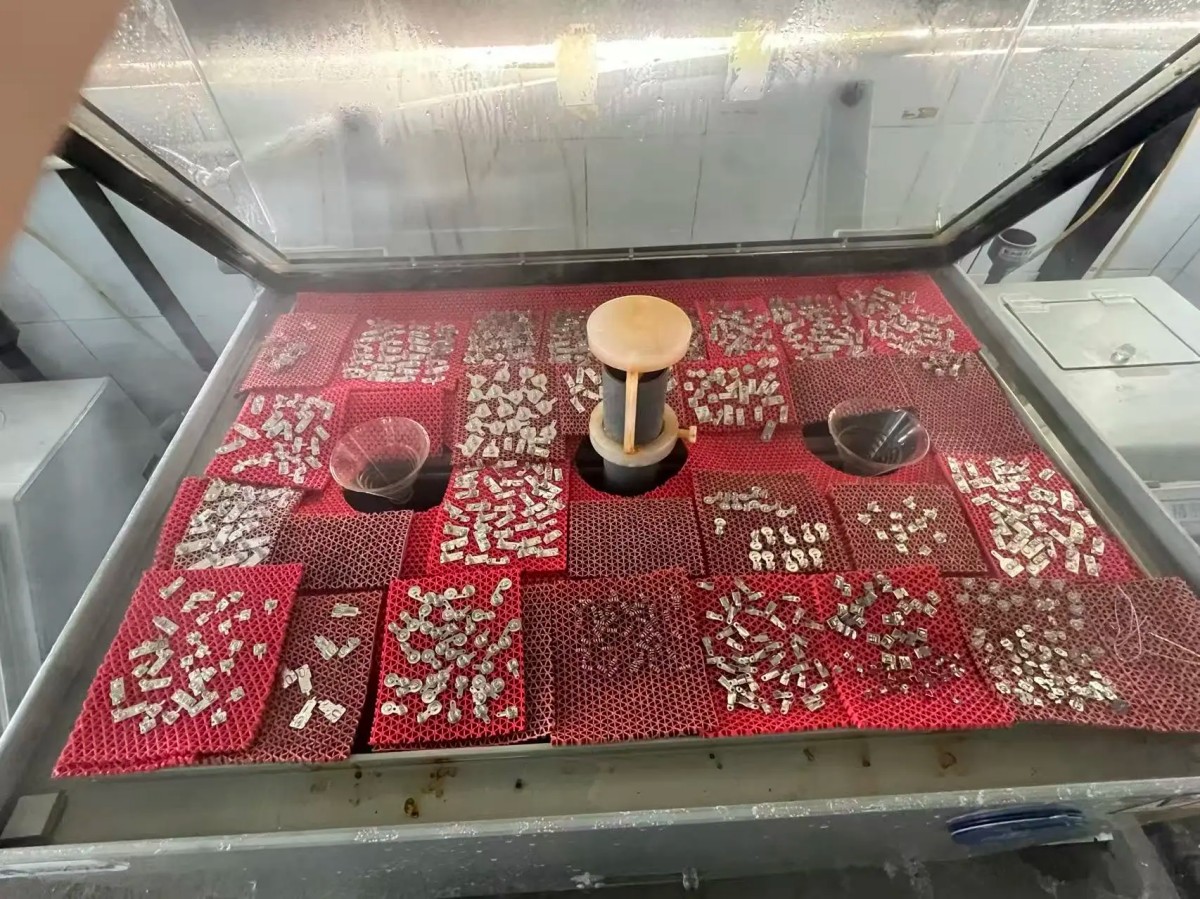
Support for irregular, universal, and customized designs; The minimum order quantity is about 20000 sets, with a delivery time of 5-7 days. For the first cooperation, it is recommended to make a sample first to verify the assembly suitability, the coating state after salt spray, and the elasticity retention after 100 disassembly and assembly.
7. Common selection misconceptions
One is to only look at the unit price without considering the process: low-priced shrapnel is often accompanied by hidden defects such as uneven electroplating and poor riveting, which are prone to leakage during factory inspection and only exposed during use. The second is to ignore tolerances: the substrate thickness is 0.2-0.5mm, the wire diameter is 0.3-1.0mm, and the tolerance can reach 0.01-0.5mm. The toy space is compact, and if the tolerance is out of control, it cannot be installed or the contact is virtual. Thirdly, skip the salt spray verification: toys that are exposed to sweat for a long time and have insufficient salt spray levels on the coating will oxidize and increase resistance. It is recommended to verify all three items together during the sampling stage.
FAQ
Q1: Is toy battery shrapnel universal? Not universal, please select according to the battery model.
Q2: Is there a big difference between plush and electric toy shrapnel? Plush heavy and safe appearance, durable electric heavy current.
Q3: Which is better, bridge riveting or spot welding? Bridge riveting with 16 pound tensile force, resistant to spring detachment, consistent quality, more suitable for toys.
Q4: Why is salt spray testing important? To measure the rust prevention of the coating, attention should be paid to toys that come into contact with sweat and moisture.
Q5: What should be prepared for sampling? The battery model, compartment size diagram, and material coating requirements are sufficient, with a minimum contract of 20000 sets.